


MiDFUN Product Module / FMEA
Risk analysis that connects product design, process planning, and control plans
FMEA supports DFMEA and PFMEA work so engineering and quality teams can identify failure modes, evaluate risk, assign actions, and reuse prevention knowledge.
Best Fit
- AIAG-VDA DFMEA and PFMEA programs
- New product launch risk review
- Audit-ready risk and action tracking
Key Capabilities
- Failure-mode structure and risk scoring
- Action ownership, due dates, and follow-up
- Linkage from risk analysis to control planning
QRP Data Flow
FMEA creates upstream risk data that can support APQP, control plans, SPC monitoring, and corrective-action learning.
 FMEA is the best tool for putting the principle that “quality is designed in” into practice, and a key reliability analysis method for preventing poor quality. By maintaining consistency from each product’s early supplier-evaluation stage (SFMEA), through the development stage (DFMEA), and on to the mass-production stage (PFMEA), the FMEA system lets you reliably design and control product quality.

Good news:
In response to widespread customer questions about the differences between the new and previous FMEA editions and how to apply the new edition in practice, we have already held more than ten free online seminars on the theory of the new and previous FMEA editions and the practical application of implementing MiDFUN software.
Interested customers are welcome to register by leaving their company details and email address, along with the topics they would like to learn about.
We will explain the key points of auditing and implementing the new edition and the differences between the new and previous editions, and will demonstrate how to apply the new edition in practice to solve problems and respond to customer audits. Everyone is welcome to join. The topics are as follows:
1. The substance of the new FMEA edition and how it differs from the previous edition
2. How enterprises can implement the new FMEA edition system & respond to customer audits
3. The positioning and practical application of the five IATF core tools, common issues in smart factories and big data, and interactive discussion of practical quality-management questions
View latest news After more than a decade of R&D and refinement, MiDFUN upgraded its FMEA system in 2019, and in 2021 enhanced the original FMEA (AIAG-VDA Edition 1) with new capabilities in response to the latest regulations and customer audits. The new version offers the following features: 1. FMEA 4th Edition and the VDA edition can run on the same software, with ongoing revisions and upgrades based on the latest CSRs and regulations. The new version adds multiple document capabilities such as structure trees + process trees, parameter diagrams, function nets and failure nets, and risk matrices. 2. FMEA & CP can be deeply linked. Beyond cross-referencing each other to stay in sync, the new version adds multiple query & ongoing-maintenance capabilities that keep FMEA/CP foundation versions & projects consistent within the system, surpassing the limited versions found at typical companies in practical use. 3. In the new version, FMEA-CP-SPC-8D information can be fully linked to achieve a complete quality loop. 4. APQP-PPAP, FMEA, CP, DCC, MEET, and more can be integrated on a single platform, interlinking enterprise information all the way from R&D to production. 5. MiDFUN’s professional consultants support customers through a smooth go-live, from regulations to practice and from documentation to system.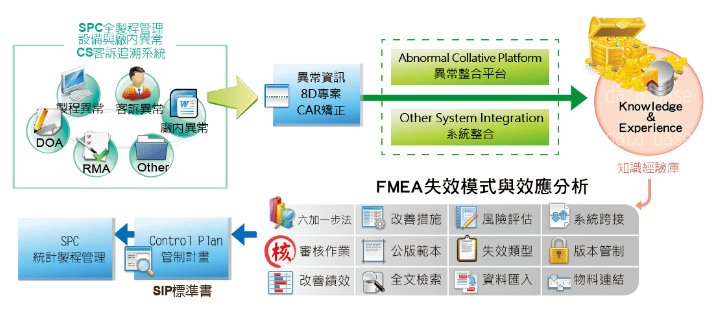
MiDFUN consolidates industry collaboration experience to strengthen FMEA system capabilities, delivering six standout advantages
Plant-wide SPC real-time quality monitoring, a Real-Time quality management system, automatic inspection High-lighting, Alarm-mail, planning of a TQM quality management process, an 8D nonconformity and customer-complaint handling procedure, Control Plan (CP) integration, and automatic delivery of QIR intelligent quality reports, plus an integration platform for ERP and MES systems. 1. Powerful information-linking capabilities and step configuration let VDA_FMEA be implemented as an enterprise knowledge base. 4th Edition data can also be integrated with the new version in the same system. 2. Activate the FMEA knowledge base and foundation versions, laying a solid foundation by aligning linked versions with product FMEAs. 3. AP (Action Priority) management, combined with proactive task tracking across departments, breaks the deadlock of one-person FMEA. 4. Rigorous information-security management and a powerful full-text experience-retrieval capability for knowledge across plant sites. 5. Linking SPC, 8D, and CP makes FMEA the knowledge core of enterprise R&D and quality management, and a powerful partner to automakers. 6. Combined with MiDFUN’s professional consulting and rich industry experience to drive an excellent system go-live.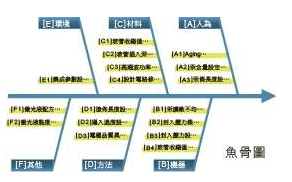
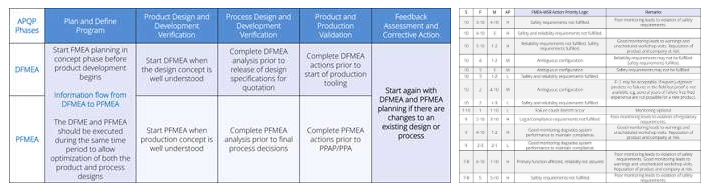
The FMEA system platform and five optional modules
FMEA provides R&D and quality assurance teams with a complete, fluid operating platform that helps you rapidly accumulate knowledge and experience. To achieve the best knowledge transfer, shorten development cycles, and lower the cost of variation, MiDFUN FMEA draws on industry collaboration experience to expand the system’s functional modules, adding modules such as APQP/PPAP, CONTROL PLAN, DCC document management, and meeting management. This implements standard operating procedures for product R&D and quality management, while leaving room for integration with other enterprise tools such as PLM and ERP, so that an enterprise’s information tools can work in concert and generate the synergistic benefits of big data and AI.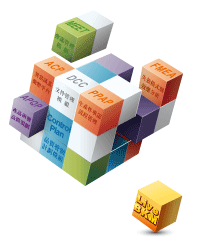
APQP/PPAP
Advanced Product Quality Planning / Production Part Approval Process workflow management moduleCP (Control Plan)
Control Plan managementMEET
Meeting management moduleDCC
Document management moduleFORM
Custom form module Read moreMiDFUN’s new FMEA edition features
The 4th Edition and the VDA edition are merged into a single system, so existing FMEAs & the latest data join seamlessly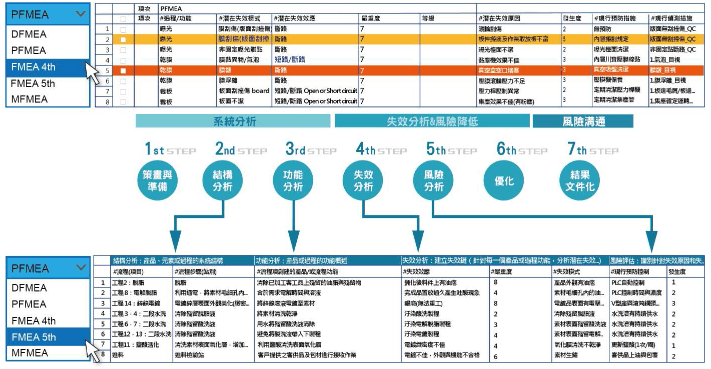 Screens designed for the latest regulations, with workflow and wizard design and dictionary selection, make system go-live simple and convenient.
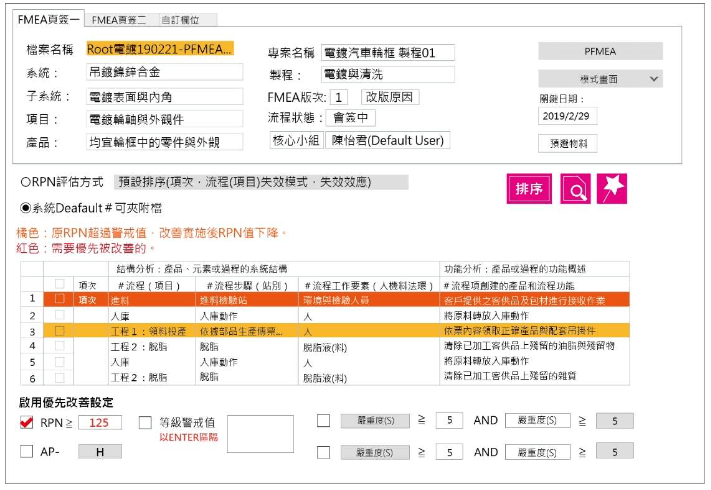 Wizard guidance makes the new (AIAG-VDA) edition easier for beginners to pick up.
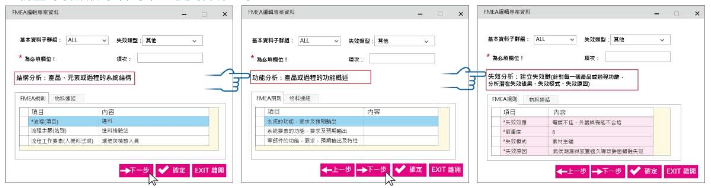 FMEA & CP linking connects the system end to end, and an added part-number linking capability makes system management far superior to scattered, disorganized Excel
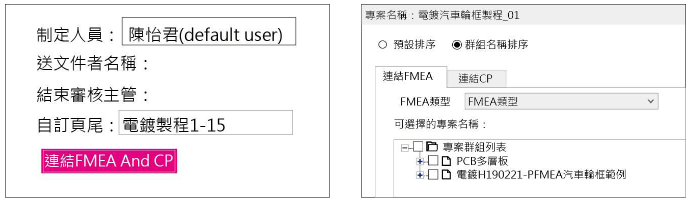 Cross-project system search (multiple parts, sub-assemblies, or multiple processes may combine to form this secondary FMEA, generating analysis reports such as fishbone diagram reports and Pareto chart reports)
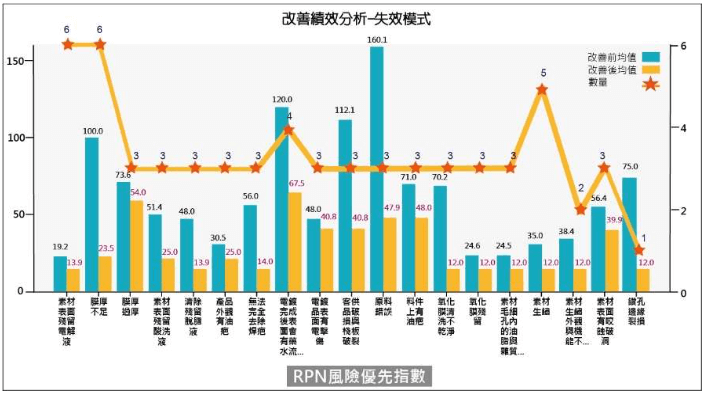
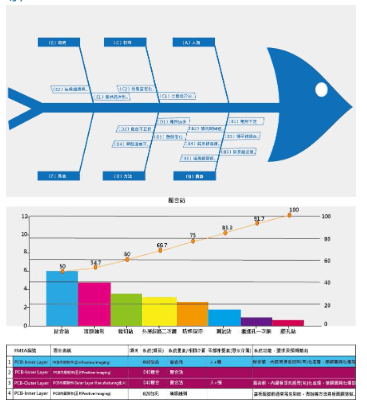 Advanced analysis can analyze the performance and execution progress of each FMEA project and integrate reports across projects—meeting the concrete needs that enterprises truly require
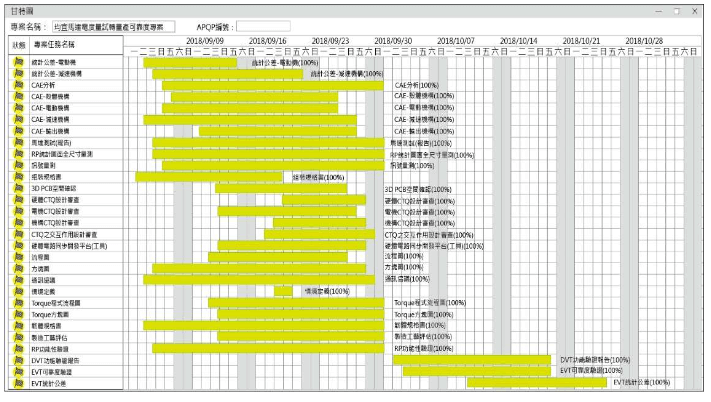
 Extension: FMEA can become part of APQP/PPAP, letting enterprises develop new products and validate them with the BKM system in one seamless flow
 Linked with COMPRO ACP, FMEA reserves space for COMPRO’s 8D improvement cases. Users can link the items to be connected back to FMEA through 8D, so that after discussion the FMEA core team can bring the items to be introduced into the correct position, making them one of the sources of a revision.
 Compliant with Step 7, Results Documentation—the RPN risk matrix chart
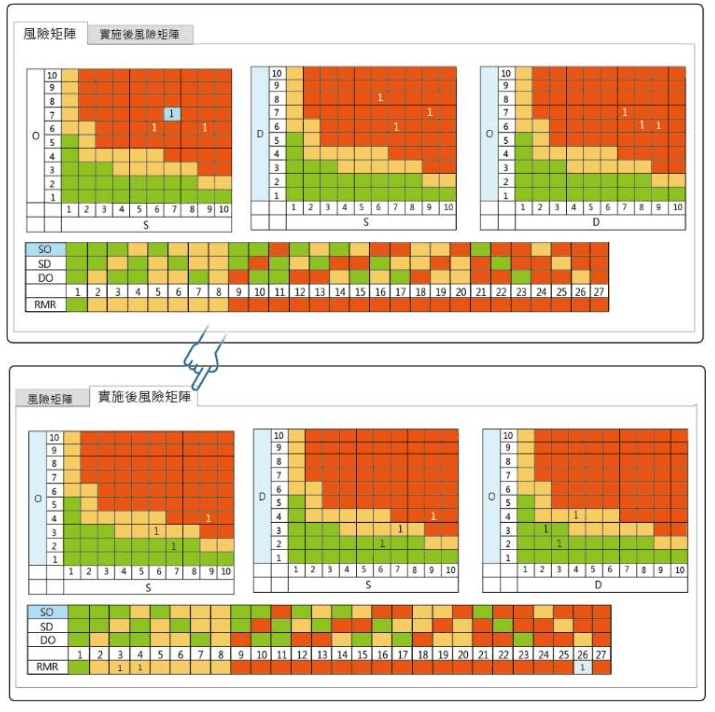 New types of FMEA analysis charts, along with structure trees and process trees, make building a new FMEA system easier and more structured
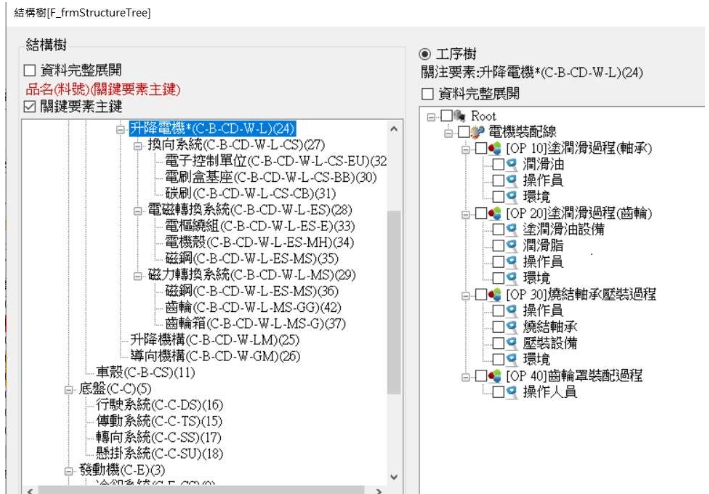 Structure trees and process trees
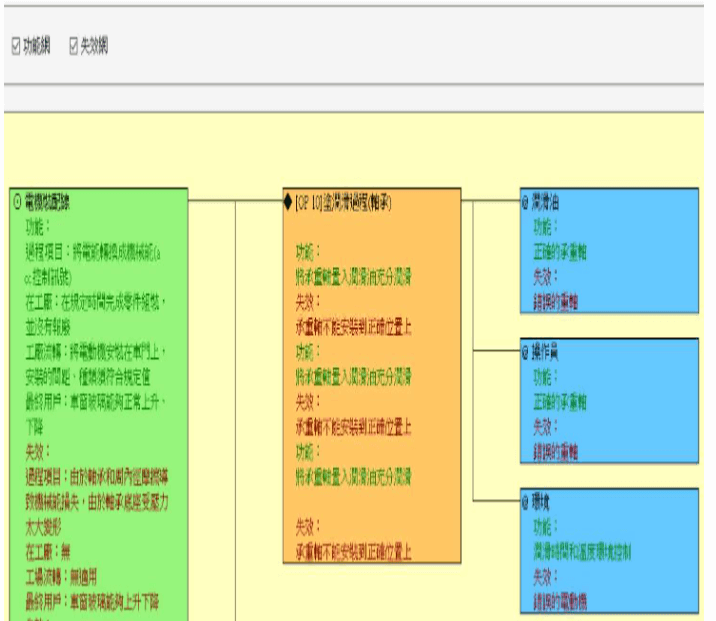 Function nets and failure nets
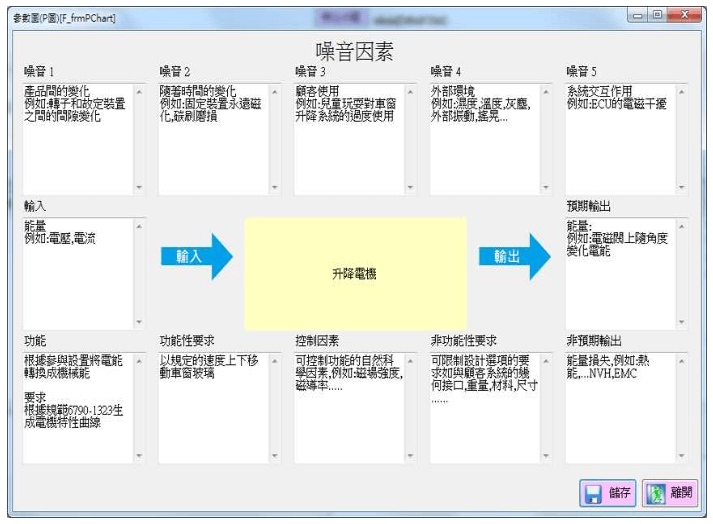 Conclusion: The FMEA in MiDFUN’s BKM PLUS system supports both AIAG 4th Edition and the new AIAG-VDA edition. Aligned with the latest regulations and working through Foundation foundation versions and Family projects, MiDFUN’s new FMEA edition uses the various capabilities of the 7-Step Approach and links every product and process flow. Beyond effectively systematizing FMEA and greatly reducing manual effort to build the FMEA knowledge system more efficiently, MiDFUN’s consultants can establish concrete, practical links between FMEA and CP based on each customer’s plant characteristics. Through this guidance, a plant’s FMEA can be linked across part numbers with CP and SPC to build systematic connections, and improvement results after 8D can be linked back into FMEA via the COMPRO nonconformity-handling platform. In this way, a complete quality loop is achieved: the system-improvement inner-loop ecosystem avoids repetitive data entry and prevents different departments from working out of step, truly achieving systematic, paperless, and intelligent improvement. Amid the wave of transformation toward electric vehicles and intelligent driving as the automotive industry reinvents itself, MiDFUN’s latest FMEA edition and professional team are sure to help plants lay a solid foundation for the next twenty years.