


IATF 16949 New Edition MSA & SPC Analysis and Application
MiDFUN / Darfon Electronics Co., Ltd. Author: Pei-Chi Chiu
Amid the wave of revisions to the new edition of 16949, the final two core tools to be revised, MSA and SPC, are the quality-management tools among the six core tools that sit closest to the process floor. From automated-instrument connectivity and ERP/MES integration to all kinds of everyday factory activities, they are the front line that affects the quality of products manufactured in the factory. Oh, and there is also SQM (Supplier Quality Management). The measurement system is the cornerstone for gauging incoming-material quality and production quality; within the factory, MSA is the standard that underpins SPC and IQC. And in today’s world of high-mix low-volume, complex and ever-changing production, with automation and a rapid surge in electronic components for electric vehicles and self-driving cars and the complex communications of an evolving range of vehicle types, the aforementioned MSA, SPC, and SQM have become even more important.
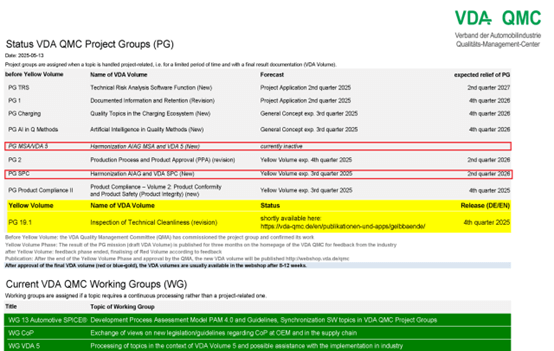
According to the latest information currently available, AIAG and VDA have collaborated to release new editions of the SPC (Statistical Process Control) and MSA (Measurement System Analysis) manuals, scheduled for official release at the following time points:
SPC manual: the draft version is expected to be released in Q4 2025, and the official version is expected to come out in Q2 2026.
MSA manual: the concept version, delayed, may be released in Q4 2025; there is no latest information on the official version.
These new-edition manuals will continue the collaboration model that AIAG and VDA used when they jointly released the FMEA manual in 2019, and will split each manual into two parts:
- Core tool manual (AIAG-VDA SPC manual and MSA manual)
- Practical application guide (SPC Practical Application Guide and MSA Practical Application Guide).
The new edition of SPC will take VDA5 as its core, integrating the strengths of VDA, AIAG, and ISO to establish a more consistent statistical process control framework. The new edition of MSA emphasizes the quantification of measurement uncertainty and capability ratios, and provides more complete analysis methods for attribute gauges, such as the short method, effectiveness, the Berk test, and the Kappa test.
I. What is the new edition of MSA? What CSR requirements do the various automakers have?
The new edition of MSA mainly adds the quantification of measurement uncertainty and analysis methods for ATTRIBUTE data. As for the latest automaker requirements, GM, FORD, and HONDA raised requirements for uncertainty in 2025; as for the attribute portion, to date there are no new specific requirements in CSR documents.
II. What do uncertainty and attributes in the new edition of MSA refer to? Where will they be applied?
- Explanation of the application of uncertainty and attributes in the new edition of MSA
- Stronger definitions___the new edition of MSA clearly distinguishes between the “measurement system” and the “measurement process,” and defines uncertainty as the credible range of a measurement result, covering all potential sources of error.
- Quantification requirements__no longer relying solely on the GRR metric, it adds a requirement to make a numerical estimate of “uncertainty” and to incorporate it into the basis for decision-making.
C. Combined uncertainty__calculate the Combined Uncertainty and the Expanded Uncertainty to comply with the ISO GUN (Guide to the Expression of Uncertainty Measurement) standard.
D. For attribute gauges (such as visual inspection by the human eye), four analysis methods are provided: the short method, effectiveness analysis, the Berk test, and the Kappa test.
In the report format, the sources of uncertainty, the estimation methods, and the results are listed, and they are compared against the product tolerance to evaluate the suitability of the measurement system.
Suppose you use a vernier caliper to measure the diameter of a part. Traditional MSA only analyzes the difference between operators (reproducibility) and the repeatability of the same operator. The new edition of MSA, however, requires you to:
- Evaluate the calibration error of the caliper
- Consider the effect of ambient temperature changes on the measurement
- Calculate the overall uncertainty (for example, ±0.02 mm)
- Determine whether this uncertainty will affect the judgment of whether the product passes
The purpose of this change is to ensure that suppliers do not merely “appear accurate” but can “quantify accuracy” and have a clearer grasp of measurement risk.
2. How do you add uncertainty evaluation for attribute gauges?
The new edition of MSA provides four methods for analyzing the uncertainty of attribute gauges:
| Method | Description | Applicable situation |
| Short Method (Short Method) | Use a small number of samples and multiple inspectors to observe consistency and deviation | Quick preliminary evaluation |
| Effectiveness analysis (Effectiveness) | Compare the gauge’s judgment with the agreement rate against a known standard | When standard samples are available |
| Berk test (Berk Test) | Test the consistency between observed values and the theoretical distribution | When a large number of samples are available |
| Kappa test (Kappa Test) | Evaluate the consistency among different inspectors | When multiple people operate |
III. Why is SQM important? What key points need attention
For why an additional SQM requirement is raised, please refer to the explanation below
- Under high-mix low-volume production and supply-chain restructuring, IQC incoming volumes are small with large variation; localization requirements are increasing, the supply chain is becoming more complex, and the tolerance for error is decreasing
- Once incoming material has a problem, downstream production immediately faces the risk of having no rice to cook
- Supply chain management has become an important quality item for the factory
- SPC needs to extend to IQC, but the supplier is not part of the factory, so some factories require suppliers to establish SPC within the supplier’s process, with the data shared and managed with the central plant
But within this, it is still not possible to control the supplier’s overall audits, abnormality 8D, SDM management, and so on
Therefore, a more complete SQM system is needed in order to manage the supply chain effectively.
By the same token, this part will be explained in the free online seminar on 2025.8.21.
IV. Analysis of the integration and application described in the new edition, with practical examples
As mentioned earlier, the new edition requires integration with systems such as MES and ERP so that quality control can be combined with production in real time. That is, when an abnormality occurs, the system can notify the MES production system to HOLD the defective production flow, stopping the abnormality from continuing at the first moment, reducing losses and correcting it in real time. In high-mix low-volume, high-value production, if this is not done, it is very easy that by the time an abnormality is spotted (for example, discovered after 2 hours of production) this batch has already been produced, and because the volume is small it is difficult to prepare materials and arrange manufacturing, losing competitiveness. At the same time, because information technology has advanced and communication methods and standards are already mature, communication between different systems has become very easy, and integration has become a mandatory foundational requirement for the new editions of SPC and MSA, as well as for SQM.
The following are some corresponding practical examples
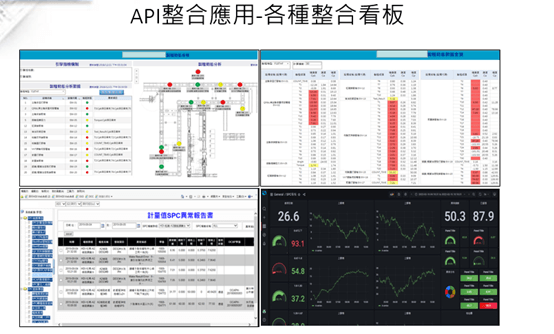
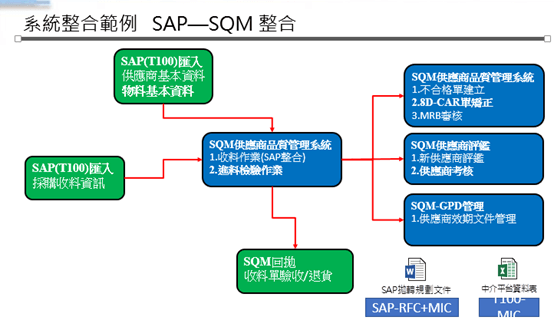
There are quite a few actual videos, which will be shared in the 2025.8.21 seminar. You are welcome to register and attend
V. Conclusion and outlook
As the six core tools of IATF 16949 are upgraded, SPC and MSA have shifted from each having its own focus to being tightly interlocked. With high-mix low-volume variable production and increasingly stringent requirements for measurement systems, the new standard puts forward more specific and higher requirements for quality management in the automotive industry. The revisions of SPC and MSA put forward corresponding formulas and integrated applications for high-mix low-volume flexible variation; this revision is not only a response to the advances in electronic and digital technology but also reflects the industry’s growing emphasis on the rapidly changing nature of quality and process control. Incoming material and the corresponding SQM supplier management have also become more important. In the future, with the rapid development of AI, digitalization, and intelligent technology, these tools, working together with professional consulting measures, will accelerate integration and evolution, helping enterprises achieve greater breakthroughs in procurement and supply chain, quality management, and flexible production efficiency, becoming ever more complete in quality records and improvement measures. Manufacturers must evolve quickly in order to increase their competitive advantage in the global market. Finally, we hope enterprises can recognize that this is already a global trend, and quickly implement and promote the application and integration of the aforementioned systems, so as to effectively improve overall quality and earn customers’ trust. The many variables in this world change rapidly; only by improving one’s own capabilities can one survive and develop smoothly in the face of these changes. Keep going!

Copyright © 2025 MiDFUN Co., Ltd. Some rights reserved
Author: Pei-Chi Chiu. First published: 2025-03-12. Type: Quality Management Column
Original link: https://www.midfun.com.tw/qc/iatf16949%e6%96%b0%e7%89%88msaspc%e8%a7%a3%e6%9e%90%e6%87%89%e7%94%a8/
This work is released under the Creative Commons Attribution-NonCommercial-NoDerivatives 4.0 International License (CC BY-NC-ND 4.0). You are welcome to share it freely provided that you attribute the original author, include the original link, do not use it commercially, and do not modify the content.
Suggested citation format: Pei-Chi Chiu (2025). “IATF 16949 New Edition MSA & SPC Analysis and Application.” MiDFUN Quality Management Column.
For reprint authorization and content inquiries: midfun@midfun.com.tw