


最後更新:2026.06.22
FMEA Failure Mode and Effects Analysis System
Unimicron Technology Corp. was founded in 1990, with its headquarters located in the Guishan Industrial District of Taoyuan. As a member of the UMC responsible enterprise group, it is a world-class supplier in the printed circuit board (PCB) and IC carrier (IC Carrier) industries. Its production bases in Taiwan are located in Taoyuan City and Hsinchu County, namely Guishan, Luzhu, Dayuan, Zhongli, and Yangmei in Taoyuan, and Xinfeng Township in Hsinchu County, while its facilities in mainland China are established in Shenzhen, Suzhou, Kunshan, and Huangshi City in Hubei Province. The company is currently divided into the PCB Business Unit, the Carrier Business Unit, and the IC Testing Business Unit, with a total of 27,000 group employees at home and abroad.
After several years of evaluation from 2017 to early 2022, Unimicron ultimately decided to adopt the new VDA version of the FMEA system from MiDFUN Co., Ltd. Unimicron already had its own in-house developed FMEA system, but applying it across the various business units presented many problems. The main reason was that the company had expanded continuously over the past decade and the nature of the various business units differed considerably, so problems in applying FMEA grew increasingly numerous and complex. After multiple discussions between the vice president and the business unit managers, the decision was made to adopt the MiDFUN FMEA system. Beyond the new VDA regulations, in terms of vendor technology and expertise for integrating with the original EFGP approval workflow, MiDFUN also held a considerable advantage and wealth of experience. With multiple automation and information projects such as automotive electronics, ESG, and the smart factory all underway at the same time, after comprehensive evaluation the company ultimately chose to partner with MiDFUN. From the very beginning of planning, the company’s quality department adopted MiDFUN’s latest architecture, in which each business unit can establish its own FMEA type, and the fields and management of that type can be independent of the types of other business units. After all, the fields of the PCB, carrier, IC testing, and other business units differ greatly, and the FMEA content of each business unit will also have different field content and subsequent SOD and AP evaluations for different customers. Under this new architecture, different business units can share a single platform within the same system (the approval system, HR system, and PLM system can all be synchronized), so that a small number of personnel can integrate and produce different project content to provide various project documents to customers worldwide. For subsequent management, using the linked-revision and master-version management functions makes it easy and effective to manage document consistency, and the new system can be connected to the company’s EFGP system for electronic-signature consistency, allowing relevant supervisors and personnel from different business units to integrate smoothly. Without changing usage habits, the company can easily achieve review of the new FMEA version and consistency with HR.
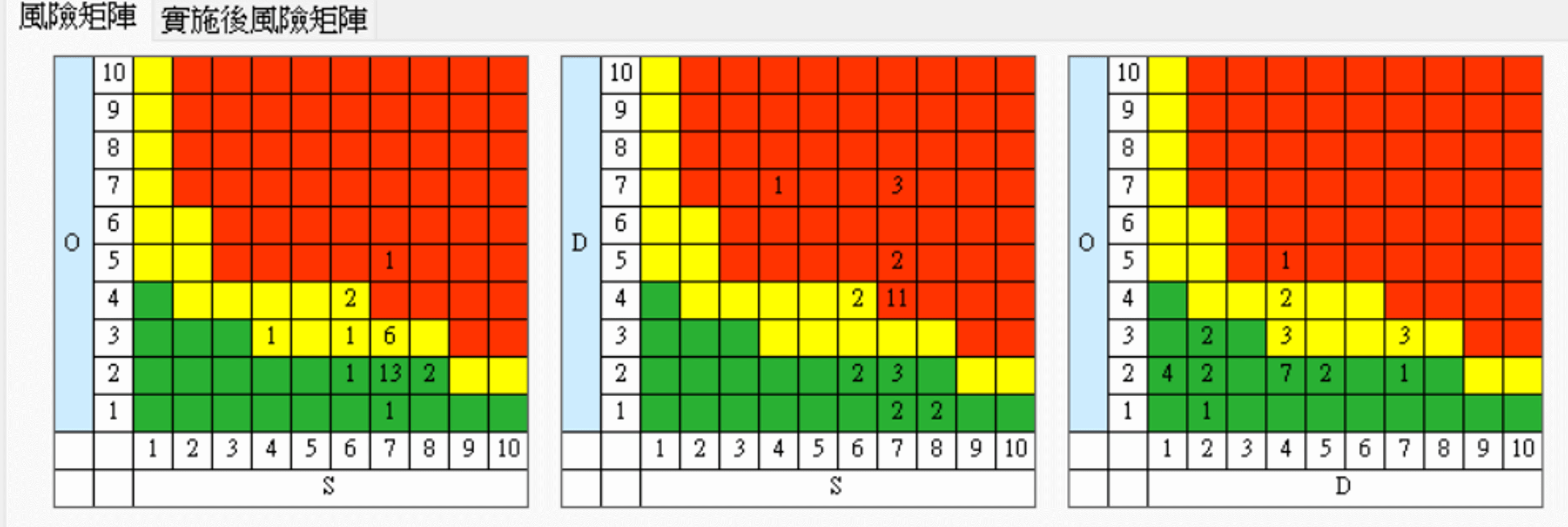
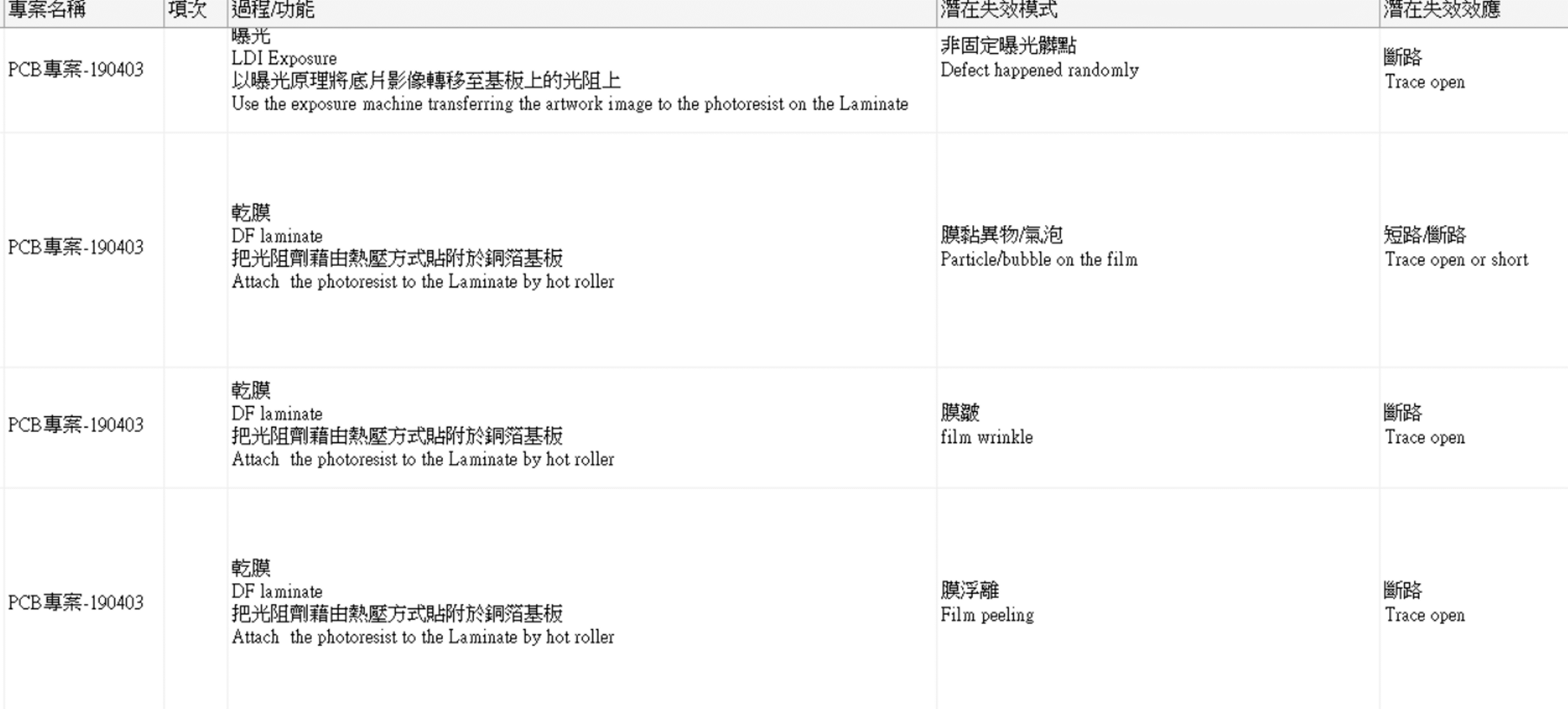
(Example)
In 2023, with a deeper integration from EFGP to the BPM system and the application of this system to other affiliated enterprises and mainland China plants, the successful experience was expanded in scope, enabling more new FMEA applications and integrations to extend to other units and deepen the benefits of use. HR linkage and the MAIL SERVER, along with the overdue-handling mechanism, work in concert with the various automated-equipment linkage applications of the smart factory the company is currently adopting. The linked-revision and confidentiality-level automation go deeper, and the revision operations are more deeply combined with the SFC and mistake-proofing to meet the company’s latest internal-control requirements. Going forward, the various data updates can be automatically linked so that users can work with ease, taking the system deeper into the Smart Factory 4.0 and linking and combining it with other systems, gradually achieving the goal of a 5G smart factory and system integration!