


最後更新:2026.06.22
Customer Profile: Kwang Yang Motor

Kwang Yang Motor Co., Ltd., founded in 1963 and headquartered in Kaohsiung, Taiwan, markets globally under the KYMCO brand and is one of the world’s major motorcycle manufacturers, with products sold in more than 90 countries. Kwang Yang Motor’s product lines span scooters, motorcycles, all-terrain vehicles (ATVs), electric vehicles (the Ionex electric-scooter ecosystem), and mobility aids, with annual output exceeding 570,000 units.
In the motorcycle manufacturing industry, the stable operation of production equipment directly affects line efficiency and product quality. Kwang Yang Motor operates a large fleet of stamping, welding, painting, and assembly equipment, and the real-time visibility and traceability of equipment management have become key to improving overall equipment effectiveness (OEE).
The Challenge: The Efficiency Bottleneck of Paper-Based Management
As Industry 4.0 advances, traditional factory equipment management models face pressure to transform. In the past, Kwang Yang Motor relied on paper forms and desktop-computer entry for equipment inspection, maintenance, and repair. The main pain points included:
Inspection Data Could Not Be Uploaded in Real Time
After inspectors recorded data on paper at the site, they had to spend additional time later entering it into the computer system. If any abnormal readings occurred in the meantime, the timing for addressing them was often delayed.
Maintenance Scheduling Relied on Manual Tracking
The scheduling and work-order dispatch of preventive maintenance were managed manually, which easily led to omissions or delays. After arriving on site, if maintenance staff were unclear about the SOP steps, they still had to return to the office to consult paper documents.
Fault Reporting and Repair Processes Were Time-Consuming
When equipment broke down, the operator had to fill out a paper repair request or call the maintenance department, and after the maintenance technician arrived, they then had to return to the office to retrieve that equipment’s historical repair records. The total response time from fault occurrence to completed repair was excessively long.
The Solution: MiDFUN TPM + TM-OP Mobile Equipment Management
The MiDFUN TPM system paired with the TM-OP mobile-device interface lets inspectors, maintenance staff, and repair technicians all operate in real time on site, no longer constrained by paper-based processes.
Digitalized Equipment Inspection
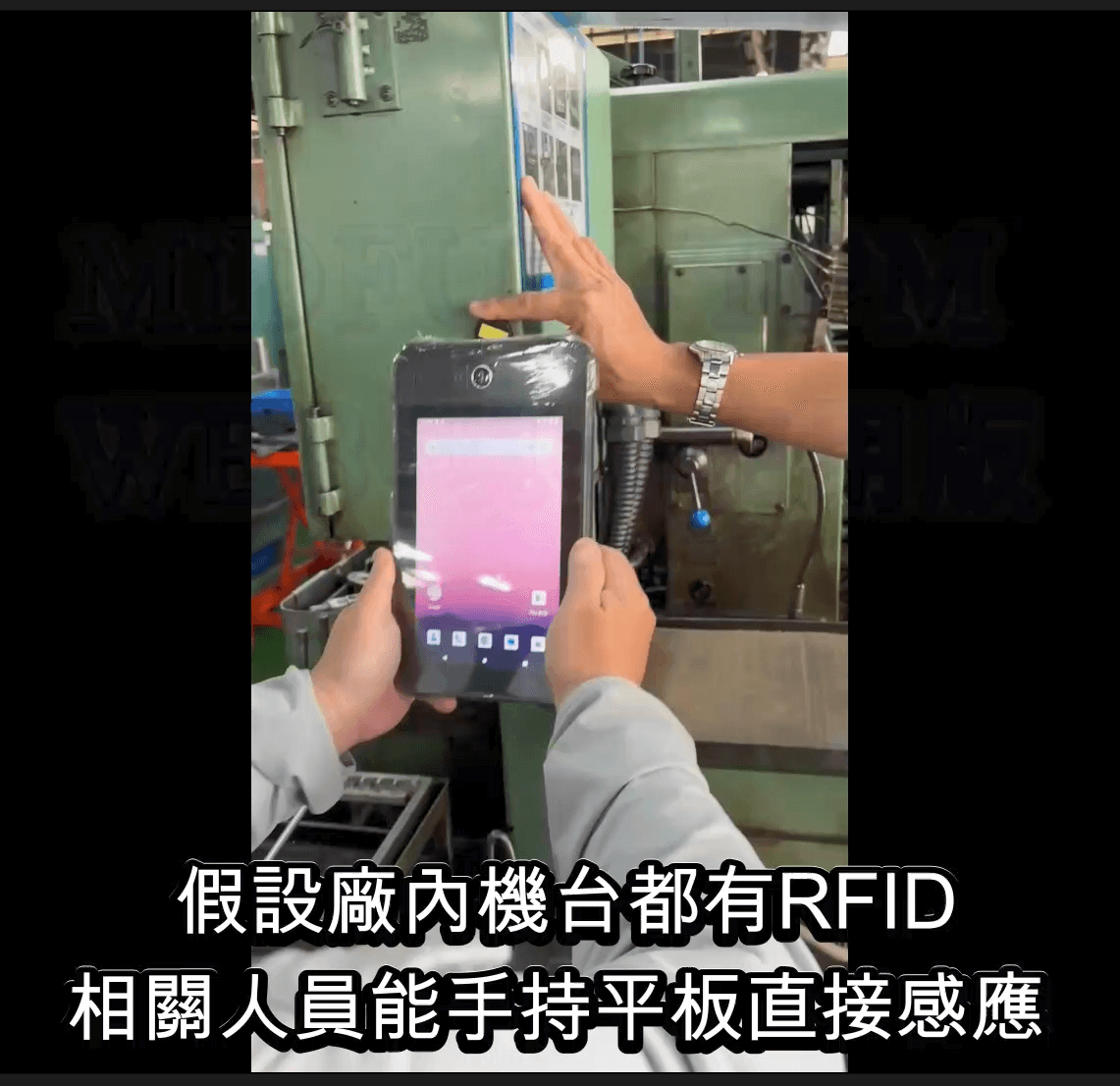
Inspectors use the MiDFUN TM-OP interface installed on tablet computers in place of paper inspection sheets. During inspection rounds, they confirm equipment location by scanning a TAG or QR Code, and the system automatically loads the corresponding inspection items and standard values. Once data is entered, it is immediately uploaded to the backend system, and abnormal values trigger on-the-spot alert determination (for example, a red-light alert when temperature exceeds the set threshold). When an anomaly is found, the inspector can immediately take a photo or video as evidence, and the system automatically adds a timestamp, greatly improving the accuracy and traceability of records.
Precise Execution of Preventive Maintenance
When the MiDFUN TPM system schedules a maintenance task, the TM-OP interface automatically dispatches the planned maintenance items to the designated equipment maintenance staff. The work order contains detailed SOP steps and can even embed image guidance to ensure correct operation. Maintenance staff can consult the work-order content and historical records right on site, performing the right steps on the right equipment at the right time.
Rapid Response to Breakdown Repairs
When equipment breaks down, the operator scans the tag on the faulty equipment or senses the TAG via MiDFUN TM-OP, immediately logs a repair order in the system, and takes photos to record the fault condition. After the repair technician arrives on site, they can directly consult the equipment’s historical repair records and maintenance manual on the tablet, without returning to the office to leaf through paper files, effectively speeding up diagnosis and reducing downtime.
Automated Reporting and Knowledge Transfer
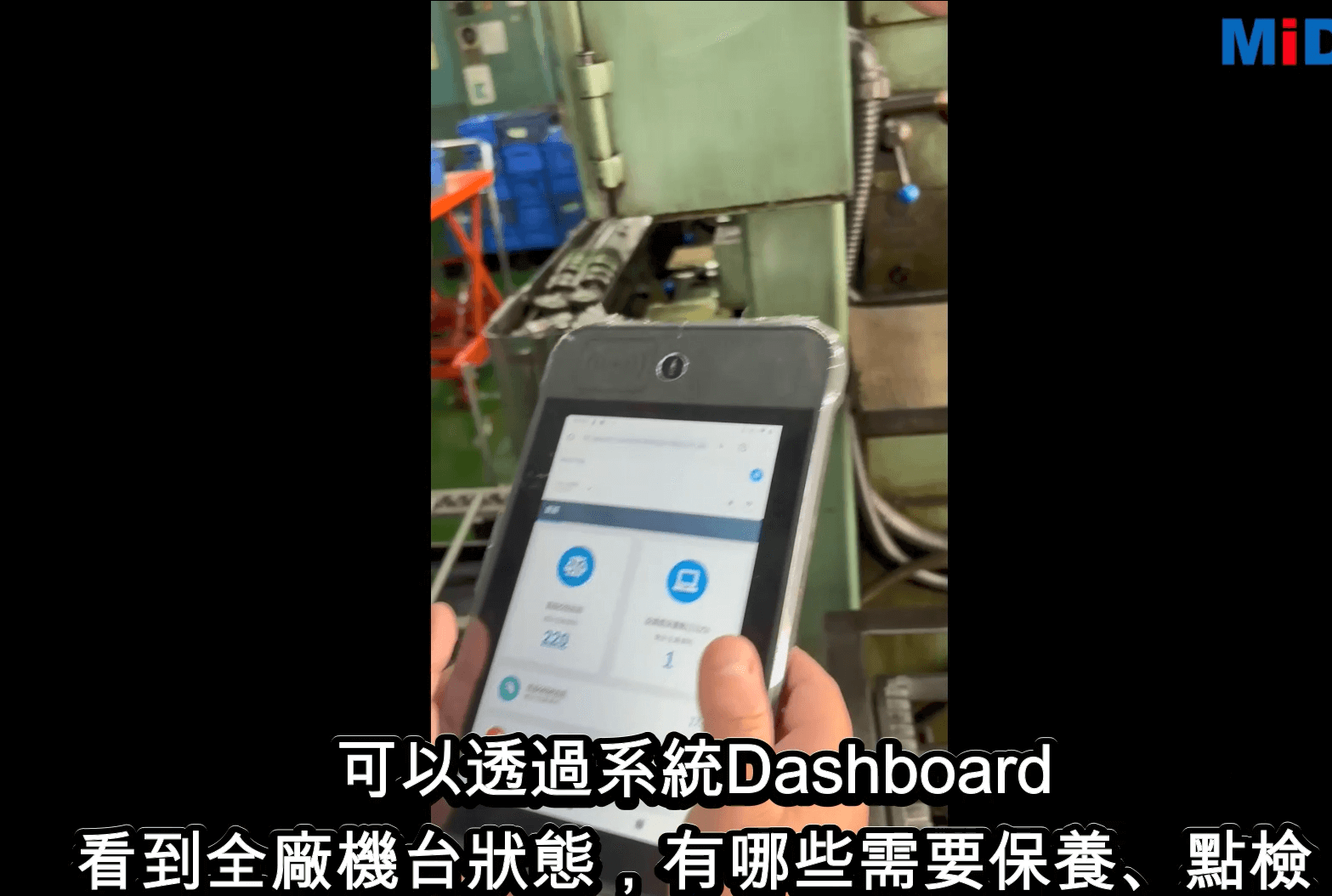
All inspection, maintenance, and repair data is uploaded to the backend system in real time, so management can consult real-time equipment health reports at any time, without waiting for manual consolidation. Records of the repair process are also archived automatically, becoming a knowledge base for future repair work and helping with experience transfer and new-employee training.
Deployment Scope and Results
| Item | Details |
|---|---|
| Deployed Products | MiDFUN TPM Total Productive Maintenance Management + TM-OP Mobile-Device Interface |
| Application Scenarios | Equipment inspection (rounds), preventive maintenance (PM), breakdown repair (CM) |
| On-Site Devices | Tablet computers paired with TAG / QR Code scanning |
| Core Features | Digitalized inspection forms, real-time alert determination, SOP work-order dispatch, multimedia evidence capture, historical-record lookup, automated equipment health reports |
| Key Benefits | Eliminating duplicate paper-based data entry, shortening fault response time, automating maintenance scheduling, accumulating a repair knowledge base |
Conclusion
The deployment of the MiDFUN TPM system and the TM-OP mobile-device interface moved Kwang Yang Motor’s equipment management from the paper era toward real-time digitalization. Through MiDFUN TM-OP’s TAG / QR Code scanning and digital inspection forms, inspection data is uploaded in real time and anomalies are flagged instantly; through the MiDFUN TPM system’s automatic dispatch of maintenance work orders and embedded SOP guidance, the execution of preventive maintenance has become more precise; and through real-time fault reporting and historical-record lookup, equipment downtime has been markedly shortened. The adoption of mobile devices is not merely a tool upgrade but a shift in Kwang Yang Motor’s equipment management mindset—from “fix it after it breaks” reactive management toward “prevent it in advance” predictive management.
Key Terms
Glossary
Frequently Asked Questions
Q.What is TPM? Why does a factory’s equipment management need to adopt a system?
TPM (Total Productive Maintenance) aims to make equipment reach zero breakdowns, zero defects, and zero accidents. Traditional paper-based management easily suffers from missing inspection records, manually tracked maintenance schedules, and slow fault-reporting processes. The MiDFUN TPM system paired with the TM-OP mobile-device interface replaces paper with tablets, so inspection, maintenance, and repair are all digitalized in real time, data is automatically uploaded to the backend, and management can check equipment health status at any time.
Q.What can the TM-OP mobile-device interface do?
MiDFUN TM-OP can be installed on a tablet or phone and is mainly used in three scenarios: (1) Inspection—scanning a TAG or QR Code automatically loads that equipment’s inspection items and standard values, and data uploads immediately after entry; (2) Maintenance—the system automatically dispatches work orders to the maintenance staff’s tablet, with SOP steps and images included in the order; (3) Repair—scanning the equipment tag reports the fault, photos and video can record the on-site condition, and once the repair technician arrives they can directly look up historical repair records.
Q.What is the difference between using a tablet for equipment inspection versus paper?
The difference is significant. With paper, after the inspector finishes recording they still have to go back to enter it into the computer, leaving a time gap. With the MiDFUN TM-OP tablet, data uploads immediately after entry, and abnormal values trigger a red-light alert right on the spot. Moreover, when a problem is found you can immediately take photos or video as evidence, and the system automatically adds a timestamp and location, so there is no need to figure out how to backfill data afterward. Management also does not have to wait for manual reporting—they can look directly at real-time equipment health reports.
Q.When equipment breaks down, how does TM-OP help speed up repairs?
The operator uses MiDFUN TM-OP to scan the faulty equipment’s tag and can immediately open a repair order in the system, taking photos to record the fault condition. After the repair technician arrives on site, they look directly at this equipment’s previous repair records and manual on the tablet, without returning to the office to leaf through paper. This greatly shortens the time from discovering the fault to completing the repair. In addition, records of the repair process are archived automatically, becoming a knowledge base, so new staff can also reference the repair experience of their predecessors.
Q.When a large manufacturer adopts a TPM system, how can on-site staff acceptance be improved?
Based on Kwang Yang Motor’s deployment experience, the key to improving on-site staff acceptance lies in lowering the learning curve. The MiDFUN TM-OP mobile-device interface is designed around “intuitive on-site operation”—scanning a TAG or QR Code automatically brings up the corresponding equipment’s inspection items, with no manual searching needed; work orders embed SOP image guidance, so even novices can follow the steps. In addition, in the early stage of deployment it is advisable to pilot on a single demonstration line or one plant area first, letting on-site staff actually experience that “using a tablet is faster and more convenient than filling out paper,” so they will naturally accept it on their own. MiDFUN provides complete training and go-live support throughout the deployment process, helping enterprises smoothly complete their digital transformation.
About MiDFUN
About MiDFUN
MiDFUN has cultivated manufacturing quality management software since 1993, with mature technology and deployment experience in applying mobile devices to the factory floor. The MiDFUN TPM system paired with the TM-OP mobile interface moves equipment management from paper to digital, from reactive repair to preventive maintenance. The product line covers
TPM Equipment Management,
SPC Statistical Process Control,
FMEA Failure Mode Analysis,
SQM Supplier Quality Management, and ten major quality systems in all, providing manufacturers with comprehensive digital-transformation solutions for quality management.