


最後更新:2026.06.22
FMEA Failure Mode and Effects Analysis System
ASE (Advanced Semiconductor Engineering) Technology Holding employs more than thirty thousand people. Together with ASE, SPIL, and USI, it has pooled fresh energy to effectively integrate group resources and unleash synergy. Through forward-looking technology R&D and tightly linked industry trends, it responds to the latest technological developments and develops heterogeneous integration packaging technology. For the era of digital intelligence applications driven by the new 5G wave, it strengthens the multiplier effect brought by system-integration innovation, delivering more competitive miniaturized, high-performance, highly integrated, and high-quality technology service solutions. ASE drives the digital transformation of smart/intelligent factories around three main pillars: “automation,” “highly heterogeneous machine-equipment integration,” and “highly heterogeneous micro-system packaging integration.” Starting from automation as our foundation, we put into practice the three-dimensional heterogeneous integration of customer, supplier, and ASE manufacturing processes, winning customer trust with advanced information technology and aspiring to drive the upgrade and innovation of the entire semiconductor supply chain. In collaboration with USI, we provide one-stop services covering front-end engineering testing, wafer probing, IC package design, substrate design and manufacturing, IC packaging, final testing, as well as module, circuit board packaging, and testing.
At the end of 2021, after extensive evaluation, ASE adopted the MiDFUN Co., Ltd. FMEA VDA new-version system. ASE already had its own in-house developed FMEA system, fully integrated with the company’s sign-off and PLM systems. The reason for adopting the MiDFUN FMEA system was that, in addition to constantly changing regulations, the new-version format, workflow, and architecture had all changed significantly. At the same time, because of IT manpower and scheduling loads and the company’s continuous expansion, with multiple projects such as automotive electronics, ESG, and smart factories all running concurrently, trade-offs had to be made. After meetings, it was decided to find an FMEA partner with strong technical expertise, stable functionality, and strong after-sales service and expansion capabilities. After extensive research, the company ultimately chose to work with MiDFUN, which has a 30-year history. The company’s quality management department already had many years of experience and established habits of using the existing system, so the early adoption phase involved a great deal of discussion and communication on integration. The company had more than twenty major standard templates, which, when converted into projects (Families), amounted to several hundred thousand; yet to produce so many projects, even multiplying the current quality assurance headcount tenfold would not be enough. Therefore, from the very start of planning, MiDFUN’s latest architecture was adopted: controllers only need to create standard templates, and subsequent projects can be generated simply by combining items from the standard templates to produce the project content the customer wants. In this way, a small number of staff can integrate and generate the content of each project, delivering hundreds of thousands of different project documents to thousands of customers worldwide. For ongoing management, the linked version-update and standard-template management functions make it easy and effective to maintain document consistency. The new system can also connect to the company’s PLM system via API and Single Sign-On, allowing relevant managers and HR (tens of thousands of people) to interface seamlessly. Without changing usage habits, it easily achieves review of the new-version FMEA and personnel consistency.
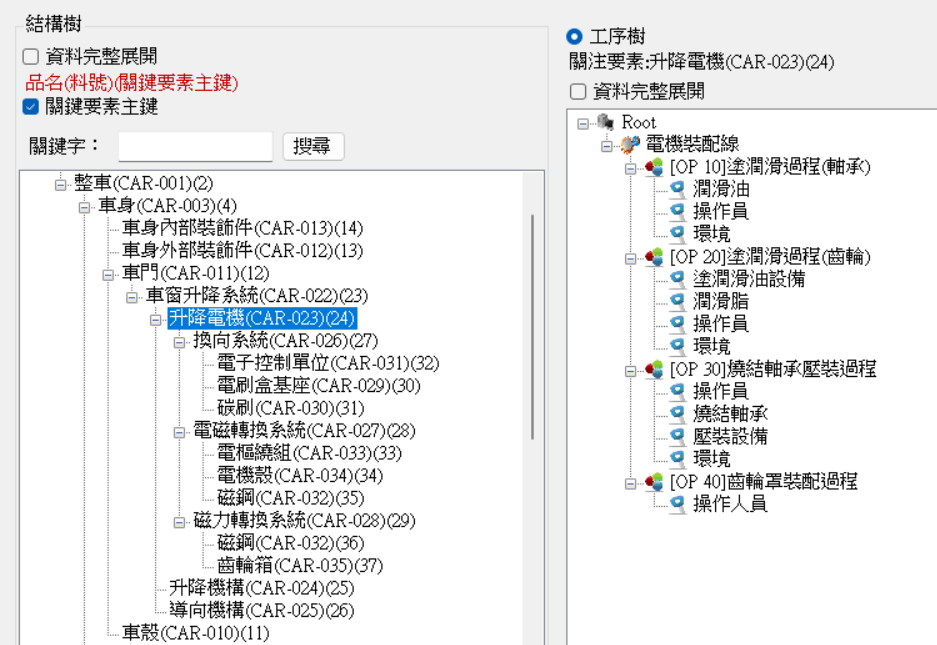
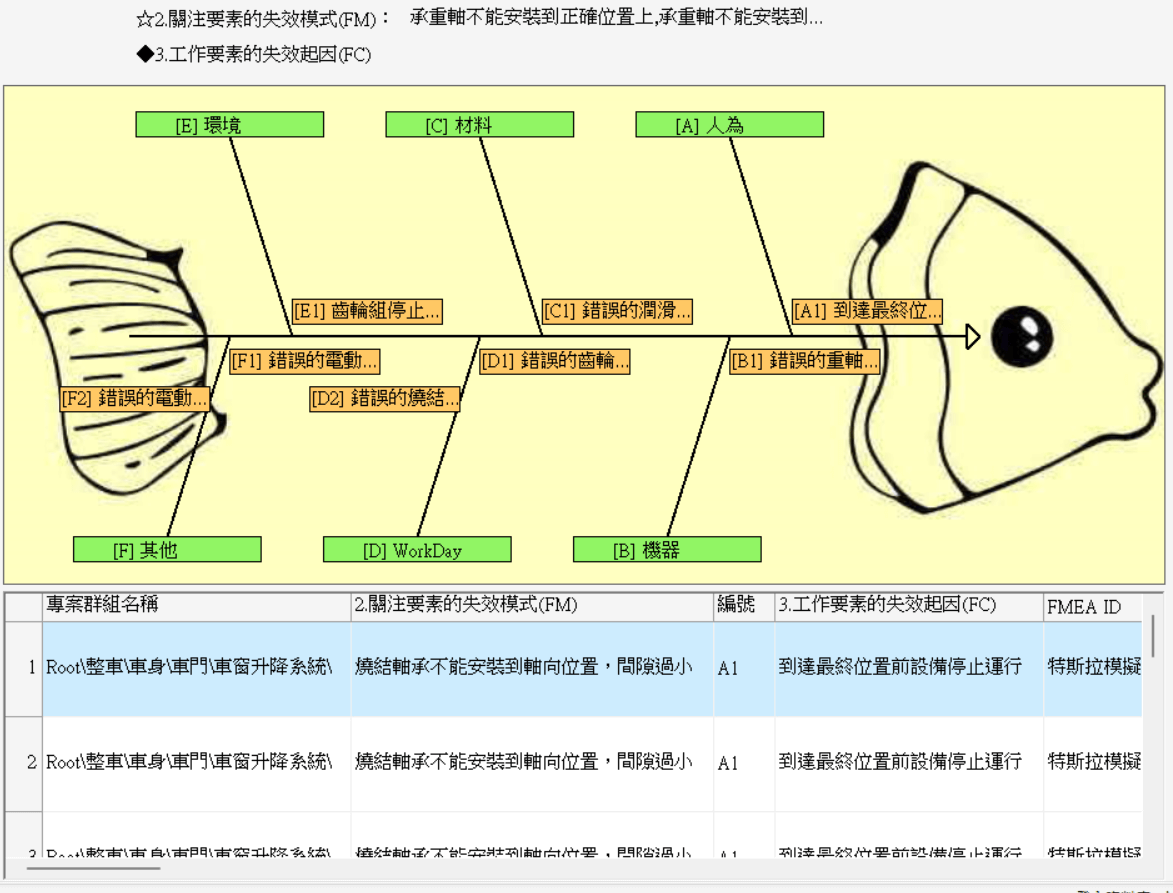 (example)
In 2023, building on the foundation of their earlier collaboration, the two parties will create more new FMEA applications and integrations, expanding to other units and deepening the benefits of use, broadening the application scope of a professional FMEA system that conforms to the latest regulations. Linked version-update and confidentiality-level automation will go deeper; version-advancement operations will be more deeply integrated with PLM, and error-proofing will meet the company’s latest internal-control integrated information-security requirements. Automatically linked updates of various data will make operations even easier for users, and going forward the system can extend more deeply into the automation of various application plants and associated enterprises. By linking with other systems to reduce staff burden, let us strive forward together!