

最後更新:2026.06.22
General Instrument of Taiwan was established in 1964. It was the first foreign-invested electronics company in the Republic of China and remains one of the largest electronics companies in the country, having been repeatedly recognized by the government over the years as an outstanding export enterprise. The company currently employs around 1,400 people and operates a plant with a floor area of 360,000 square feet. It manufactures diodes/rectifiers and transient voltage suppressors (TVS), with annual revenue of approximately NT$9 billion, and is a leading global supplier of diode rectifiers and transient voltage suppressors. Its major customers are spread across the world, including Siemens and Philips in Europe, Ford Motor and General Motors in the United States, Samsung in Korea, Sony in Japan, and Acer and Delta Electronics in Taiwan.
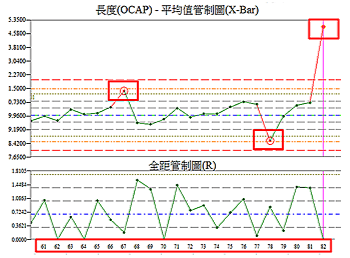
General Instrument of Taiwan adopted MiDFUN’s SPC system in 2013. The initial deployment was not entirely successful; at the time, the focus of the plan was on integrating with the PROMIS MES. However, the PROMIS system was already more than 20 years old and the original vendor was unable to maintain or update it, so only its basic functions could be used. In 2015, a newly appointed manager took over and strongly led a shift to having PROMIS export dedicated Excel reports that the MiDFUN system would automatically import. Through the efforts of IT and the support of every department, the system went live, and the company used its data analysis to identify the root causes of process problems. Notably, the person in charge of SPC went from knowing nothing about SPC to becoming self-taught, and further leveraged their process expertise to, in turn, guide MiDFUN in developing the BATCH MEAN CHART to analyze the company’s process problems — a truly admirable achievement.
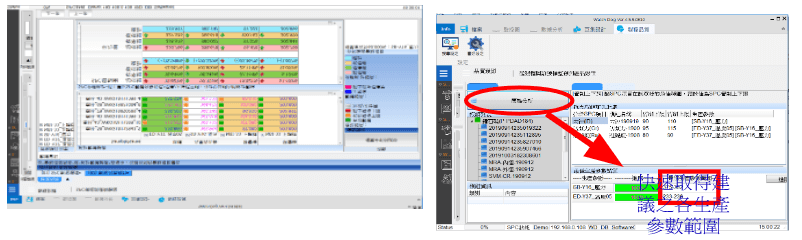
After deepening its application of 6-SIGMA in 2017, the company found that SPC PLUS could be further automated and integrated with its other systems. Therefore, in 2018 it deployed the automatic rotation display function on its dashboards, allowing managers to look up directly at the quality electronic dashboard from their offices to understand the company’s process status and the improvements being published. In addition, the collected data could be gathered automatically through PROMIS MES, so that during new product development or before the trial-production stage, the data could be captured first to determine whether the distribution conformed to a normal distribution before further processing. After the new IATF edition was published in 2019, the two parties discussed the feasibility of further cooperation on FMEA, conducting remote training on standalone testing simulations of the new FMEA edition during the pandemic. In 2023, this part will use MiDFUN’s SPC-COM-ACP-FMEA system to classify failure modes, so as to avoid errors in the analytical basis that lead to misjudgments. Count data was brought under Laney’s P chart control, and for the process parameters and smart factory portion, the two parties will further consider and cooperate on deploying a smart factory system, conceptualizing the P-Q concept into tangible empirical information for incorporation into AIQ-SPC.
Adopting MiDFUN — The Automated Equipment Project
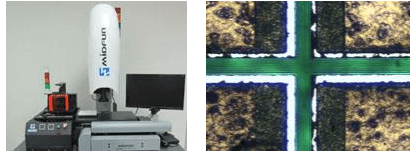
In 2014, General Instrument of Taiwan deployed MiDFUN automated equipment combined with MiDFUN SPC. Before adopting the MiDFUN system, the inspection equipment could only measure X and Y values, and it was very slow, which greatly troubled the process supervisor, who then raised the problem with MiDFUN. After MiDFUN worked with the relevant hardware equipment vendors to understand the situation, it developed a dedicated CNC measurement system at a reasonable budget. This system went live at the end of 2014 and was successfully connected to MiDFUN SPC in 2015. For the on-site equipment automation portion, in addition to combining the automated measurement data with SPC, in 2023 the AIQ smart factory requirement became a key consideration for the company’s deployment. The MiDFUN AIQ system is scheduled to further cooperate on the verification of process parameter P-Q in order to meet the future IATF automotive customer requirements.
AIQ’s P-Q virtual metrology and predicting product yield from process parameters