


ChatGPT recently went viral, because people suddenly realized that AI is human-like and can enter daily life, effectively helping us quickly complete papers, reports, songs, and all kinds of work and life applications. So how can it help us in the realm of quality? Recently a client of the author asked whether the professional terminology that customers type into their own FMEA glossary could be translated automatically. This raised the idea of whether using ChatGPT to translate professional terms automatically would be feasible, so we gave it a try and found that it works quite well! At present, OpenAI also releases an API that lets us third-party developers reference and apply it across various fields (to be charged in the future), so it is foreseeable that productivity can be rapidly improved.
Hello! If you would like to develop a companion application for the ChatGPT API, here is some information that may be useful:
- API documentation and instructions: You can visit OpenAI’s official website to view the GPT API documentation and instructions they provide. The API can interact via a RESTful API or WebSocket. You can use an HTTP client in Python, JavaScript, or another language to send API requests and receive responses.
- Authentication: Before using the API, you need to register an OpenAI account and obtain an API key. When sending API requests, you need to pass your API key in the HTTP header for authentication.
- Data format: The GPT API accepts requests and responses in JSON format. You need to convert your requests and responses into JSON format.
- Development tools: You can develop using any development tools and environment you are familiar with. For example, you can use Visual Studio Code, PyCharm, or other similar development tools.
- Application scenarios: The ChatGPT API can be applied to various scenarios, such as chatbots, speech recognition, text generation, and more. You can use the different features the API provides according to your needs.
SPC (Statistical Process Control) definition: a quality management method used to monitor and improve processes. It uses statistical analysis to evaluate whether a process is operating at an acceptable quality level and provides information on how to make adjustments. However, with the development of big data and AI technology, SPC is beginning to transform toward more advanced smart factories, bringing more benefits to manufacturing.
In the smart factory, big data and AI technology will help achieve comprehensive production line monitoring and predictive maintenance. By monitoring various parameters and data during the production process, AI can help manufacturers identify possible manufacturing problems and take timely measures to resolve them. At the same time, AI can also provide suggestions for improving production efficiency and quality by analyzing data.
In this new smart factory environment, SPC will become more intelligent. Manufacturers will be able to automatically identify and resolve potential problems through the large amount of data collected during the process, thereby achieving more efficient production. For example, by using AI technology to analyze data, manufacturers can monitor various process parameters on the production line in real time and quickly detect any anomalies, then make adjustments and improvements.
How to detect quality anomalies early
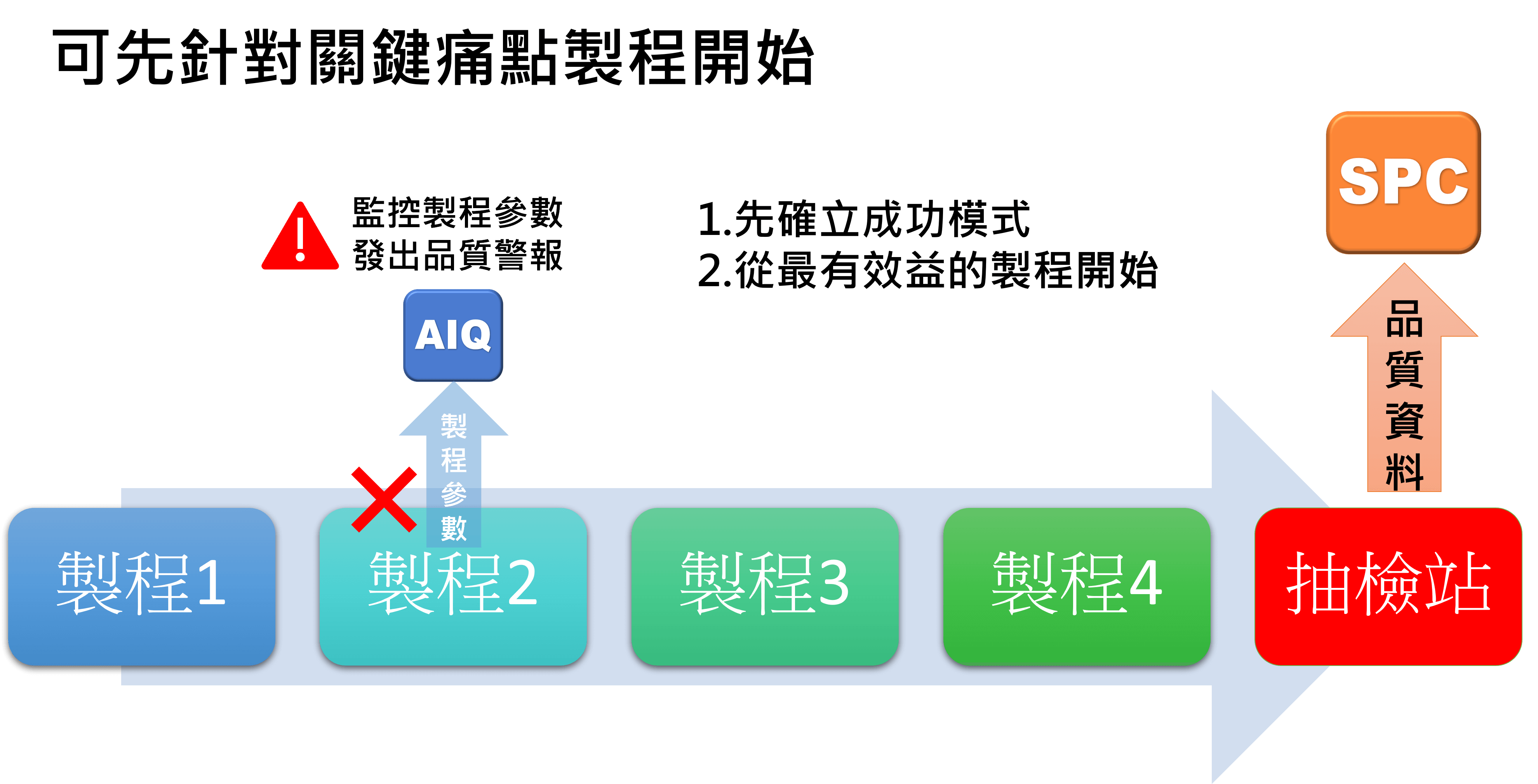
At the same time, AI technology can also help manufacturers predict future problems. By analyzing large amounts of production data, AI can discover certain potential trends and predict problems that may arise in advance. This kind of predictive maintenance can help manufacturers reduce equipment downtime, thereby improving production efficiency and product quality.
Identifying process anomalies from quality
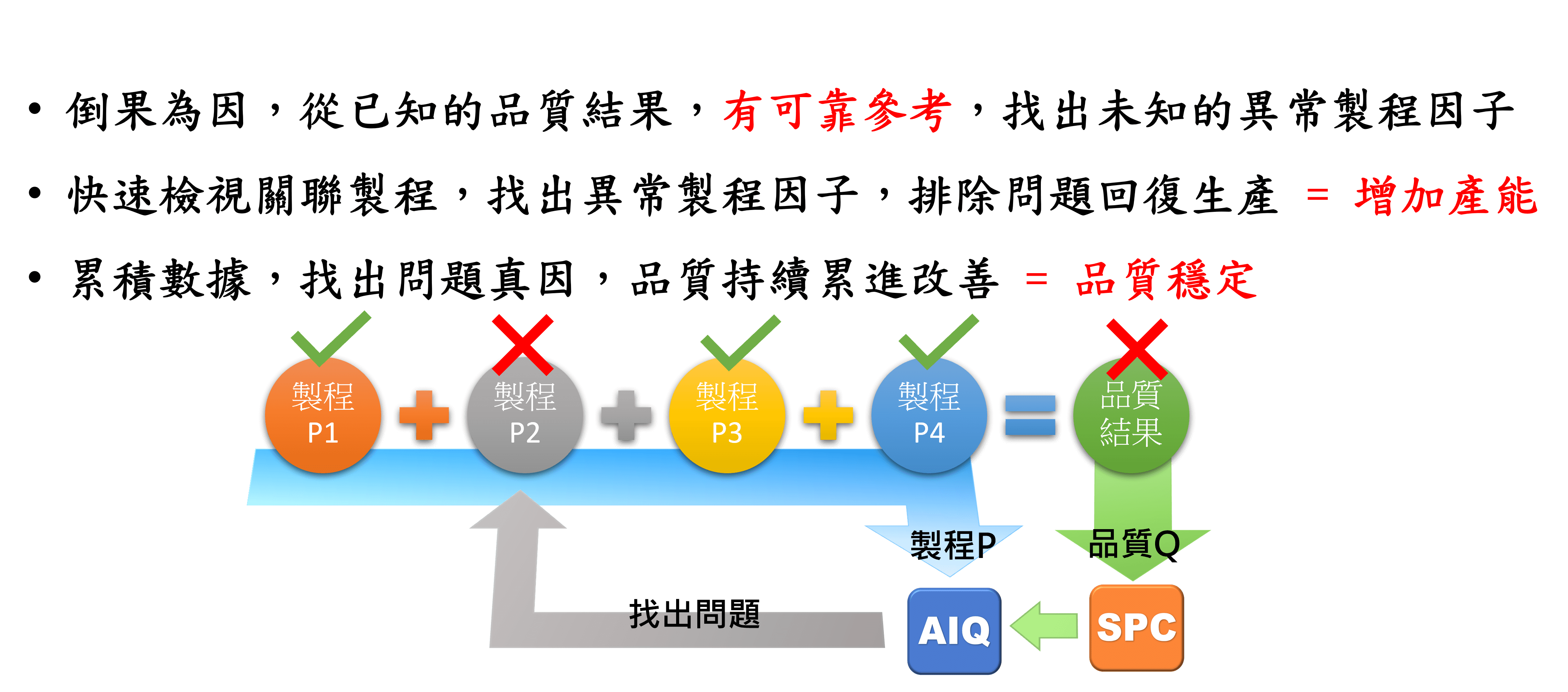
In the smart factory, SPC can also be used in combination with other AI technologies, such as machine learning and deep learning. By leveraging these technologies, manufacturers can build more accurate models, thereby improving quality and efficiency in the production process.
Using big data to improve quality
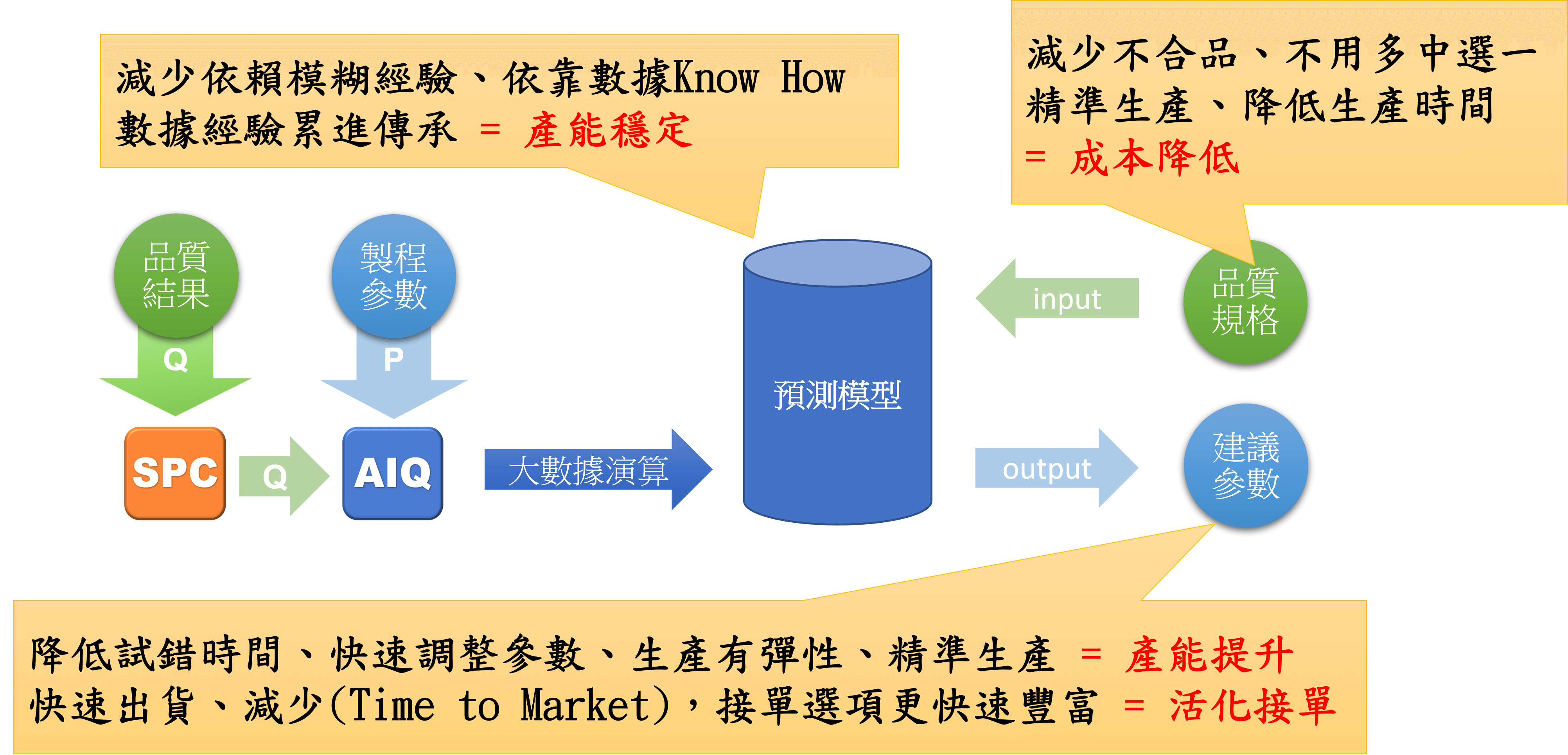
I hope everyone can make good use of various tools from this article to effectively boost your own competitiveness. Finally, let me add a little story: someone said they will just wait 10 years until AI matures and then use it, but it is like two people being chased by a tiger; the one running behind cannot afford to wait until tomorrow!
Copyright © 2023 MiDFUN Co., Ltd. Some rights reserved
Author: Pei-Chi Chiu. First published: 2023-03-01. Type: Quality Management Column
This work is released under the Creative Commons Attribution-NonCommercial-NoDerivatives 4.0 International License (CC BY-NC-ND 4.0). You are welcome to share it freely, provided that you attribute the original author, include the original link, make no commercial use, and do not modify the content.
Suggested citation format: Pei-Chi Chiu (2023). “ChatGPT-4, SPC and Big Data: The Future of the AI Smart Factory.” MiDFUN Quality Management Column.
Reprint authorization and content inquiries: midfun@midfun.com.tw