


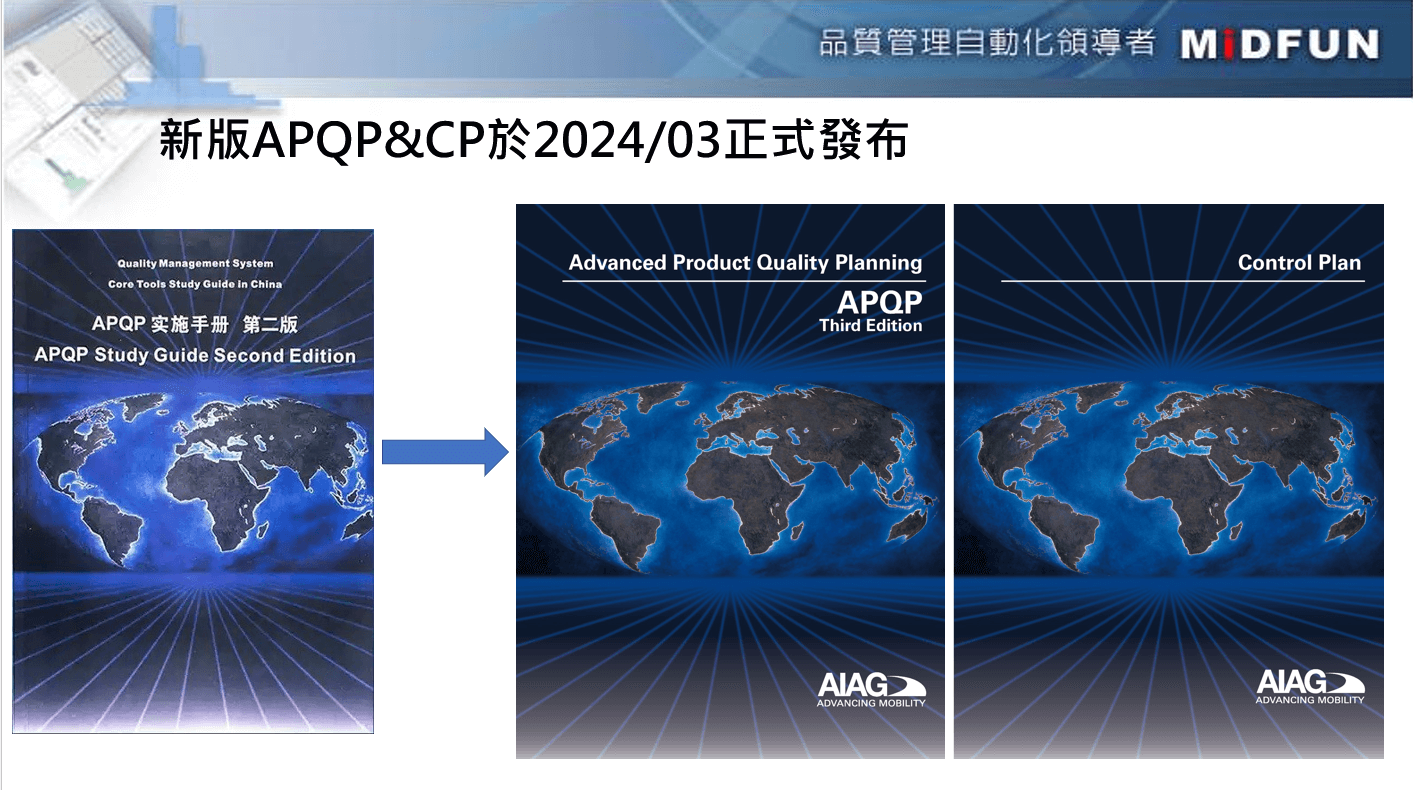
 In recent years, in the ranking of IATF 16949 third-party audit nonconformities, the CP (Control Plan) has consistently remained among the top five. Combined with the trends of automated factories and electric vehicle technology, the AIAG separated CP from the APQP manual and turned it into a standalone reference manual, using more detailed explanations and requirements to help automakers complete their control plans. As a domestic quality software system vendor, MiDFUN held multiple seminars in 2024 to explain the differences between the old and new versions of APQP & CP to more than 300 companies at home and abroad, as well as how to deploy systems to assist with management, and what adjustments MiDFUN has already made to align with this revision.
To help you quickly deploy and apply the new version of APQP, we provide preset template data in the manuals for each phase. These templates cover the key elements throughout the APQP process, including:

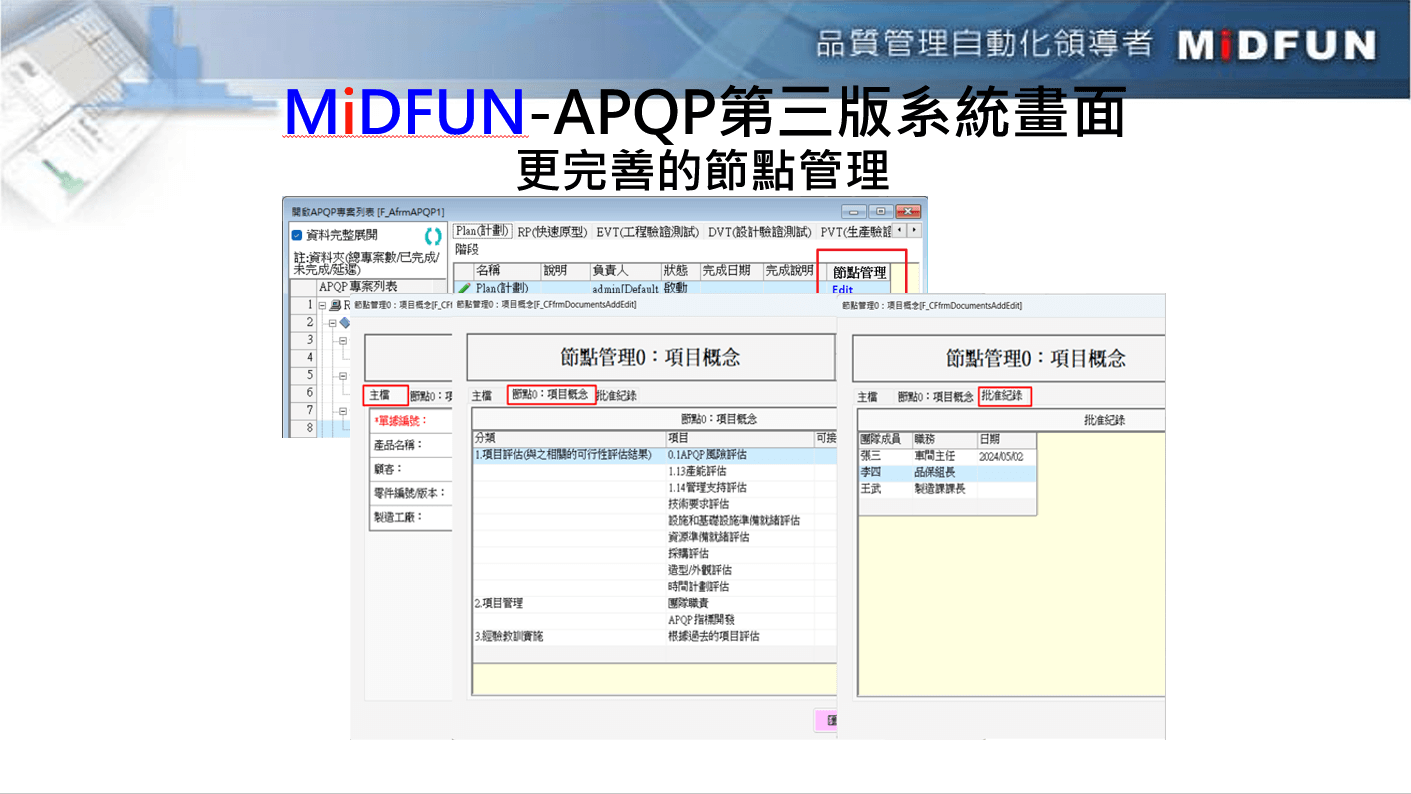
The gate management requirement newly added in the third edition: a gate is a key milestone in a project that marks the completion of tasks in a specific phase and the start of the next phase. Through clear gate definitions, review processes, and tools, it ensures that product development proceeds as planned and meets the expected objectives at each phase, thereby improving product quality and customer satisfaction.
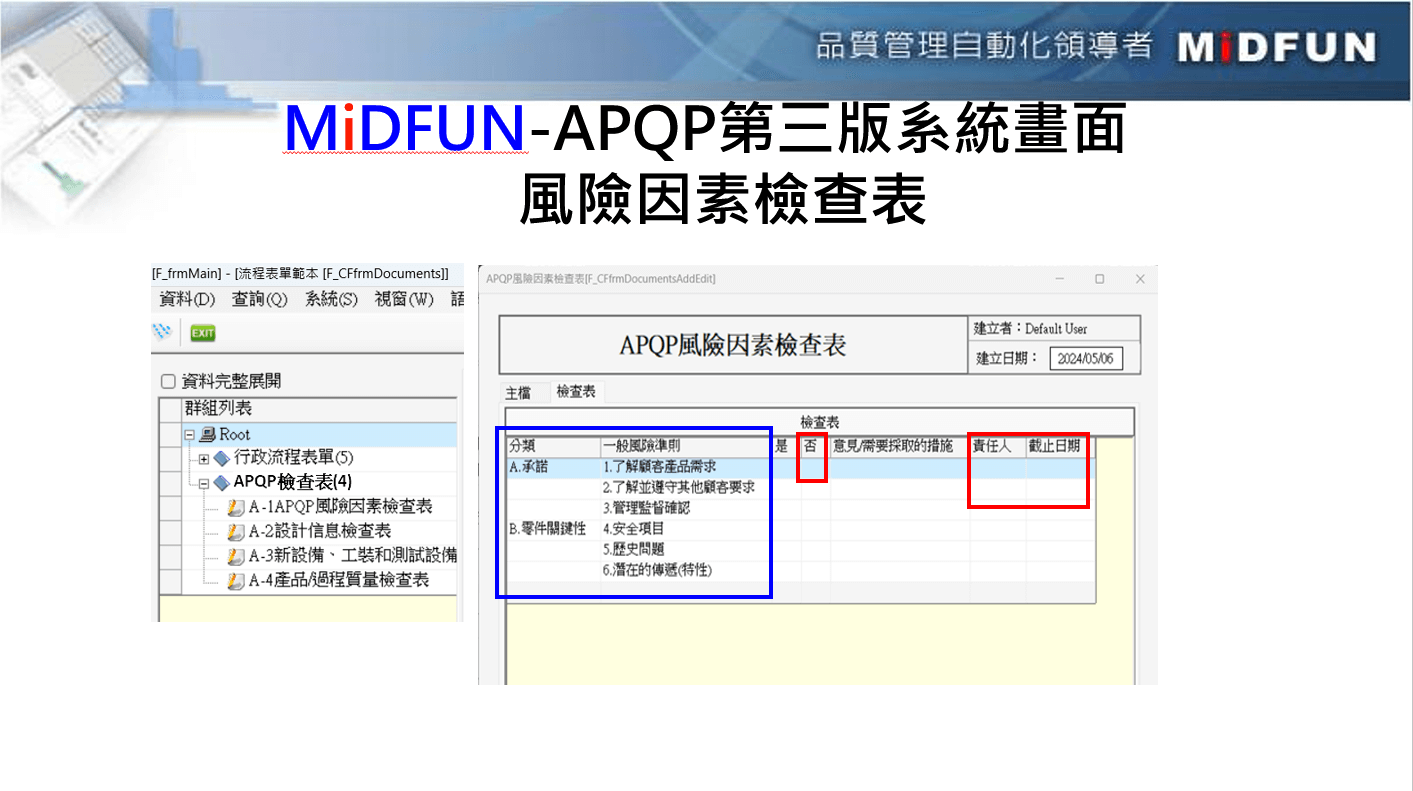
The risk factor checklist is a tool used in APQP to identify and manage potential risks. It helps teams systematically assess the risks in the product development and manufacturing process and formulate corresponding preventive measures, ensuring that the product development process proceeds smoothly and improving product quality and customer satisfaction. Combined with FMEA (Failure Mode and Effects Analysis) and other tools, the risk factor checklist can effectively reduce the likelihood of project failure.
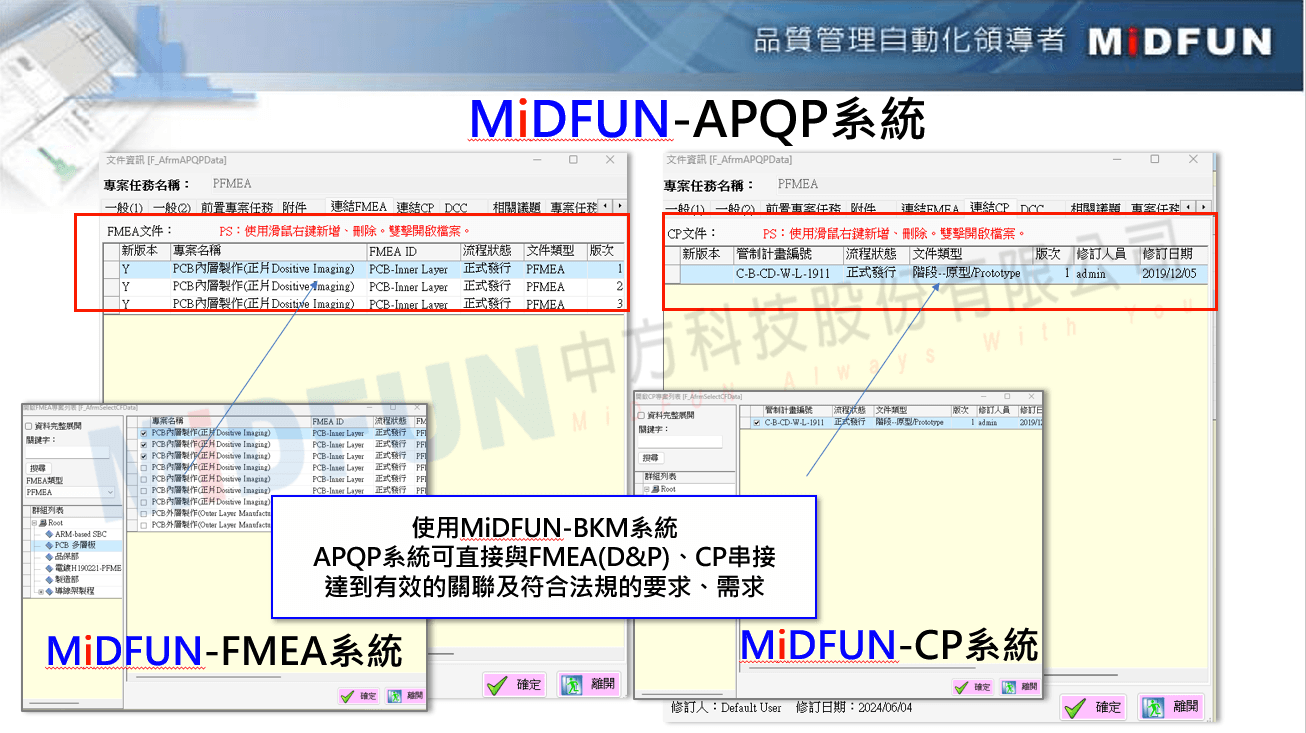
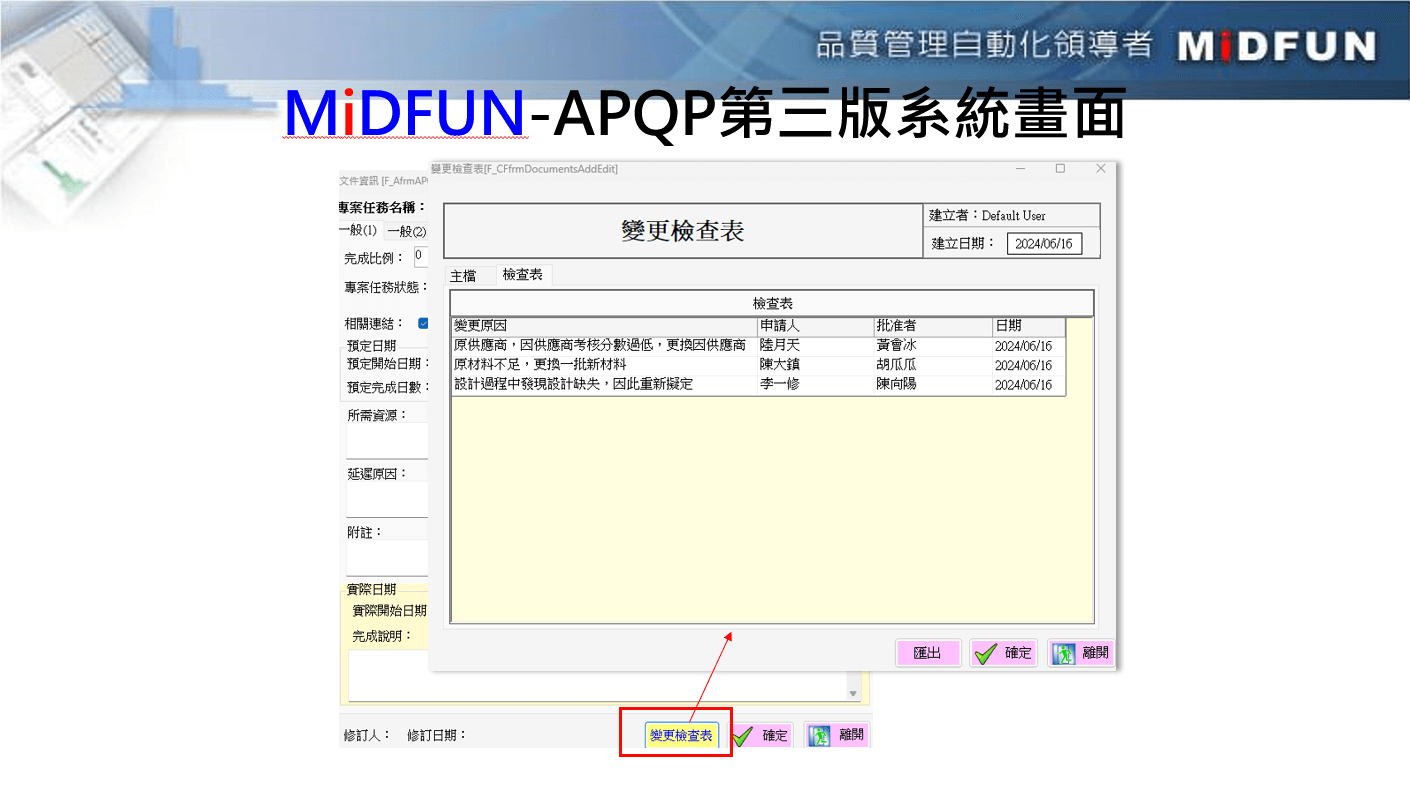
The control plan is a structured document used to describe how the key characteristics in the process are managed and controlled throughout the product life cycle (from prototype to mass production), in order to ensure that the product meets the design requirements and customer expectations. It includes:
- Identification of Key Characteristics.
- Process control methods and parameters.
- Inspection methods and frequency.
- Response measures when problems occur.
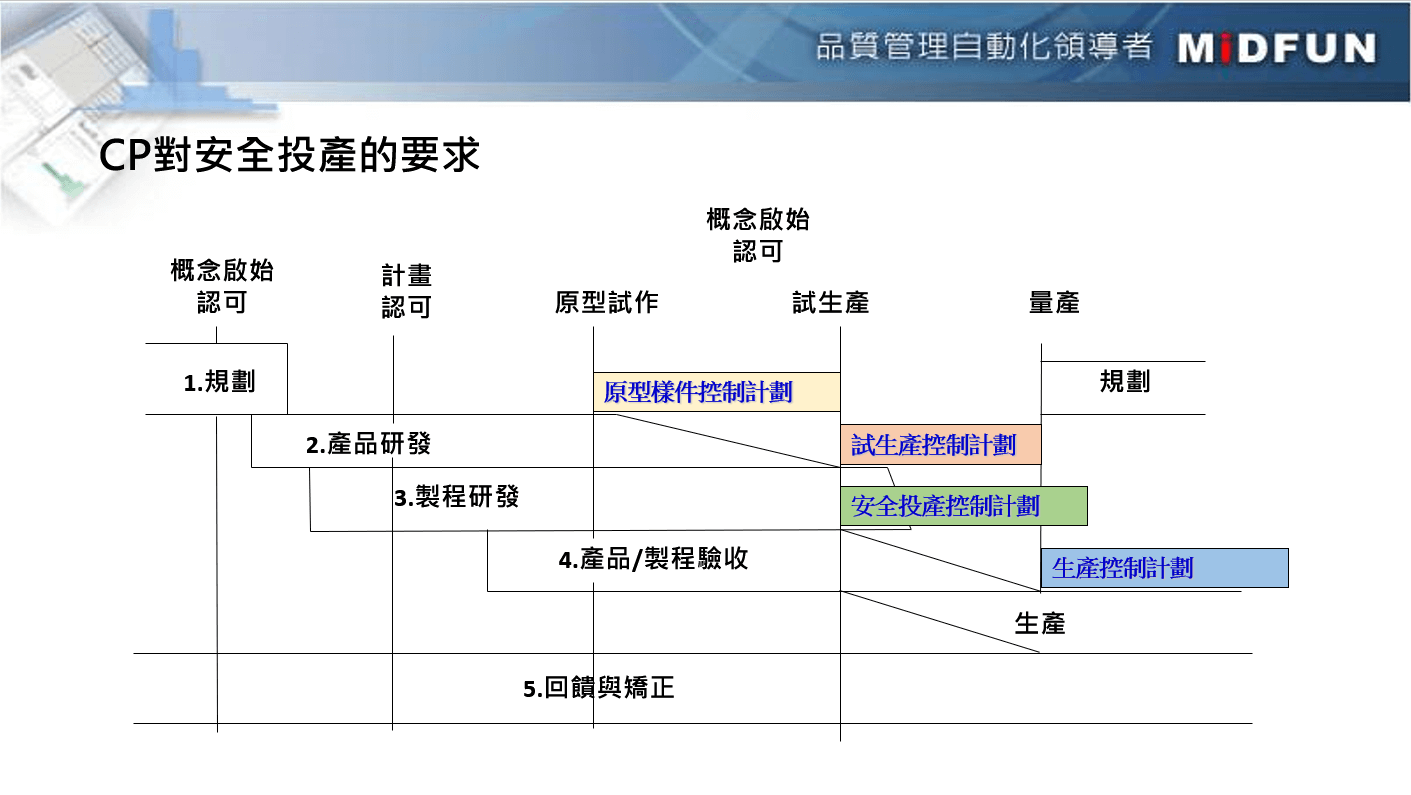
- The new version of the control plan is divided into four types:
- Prototype control plan: ensures that the prototype design meets the requirements.
- Pre-launch control plan: verifies process stability.
- Safe Launch control plan (SLP): reduces risk in the early stage of mass production and ensures a smooth transition.
- Production control plan: ensures stable mass production quality.
A safe launch control plan is what the customer may request as a safe launch requirement, moving from pre-launch to mass production, after which an exit decision mechanism for the safe launch is established.
Typically, it is a safe launch period within the first ninety days of formal mass production after PPAP approval. The control plan for the safe launch period differs from both the mass production control plan and the pre-launch control plan. During pre-launch and mass production we may use sampling inspection, whereas the requirements of the control plan during the safe launch period call for stricter control. At this stage, basically everything is subject to full inspection, using additional or stricter methods to ensure product quality. Only after ninety days of production without any problems can the safe launch period be exited and the sampling inspection approach adopted.
This safe launch control plan can stand alone as a separate document, or be merged with the mass production control plan, or be merged with the pre-launch phase control plan.
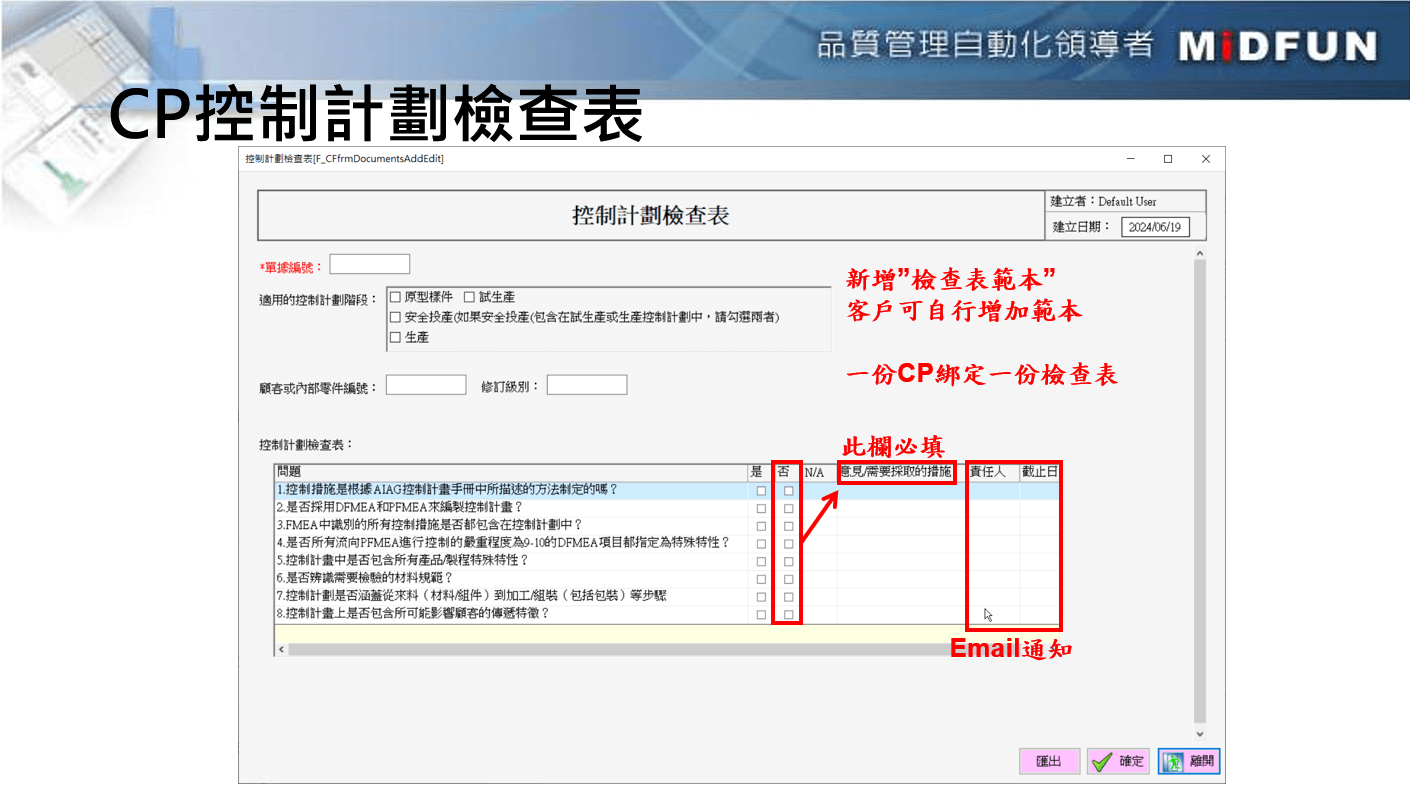
The Control Plan Checklist is a tool used to ensure the completeness, accuracy, and effectiveness of the Control Plan. It helps teams systematically check all necessary items when developing and reviewing the control plan, avoiding omissions or errors, and clearly defines the person responsible for each control step.
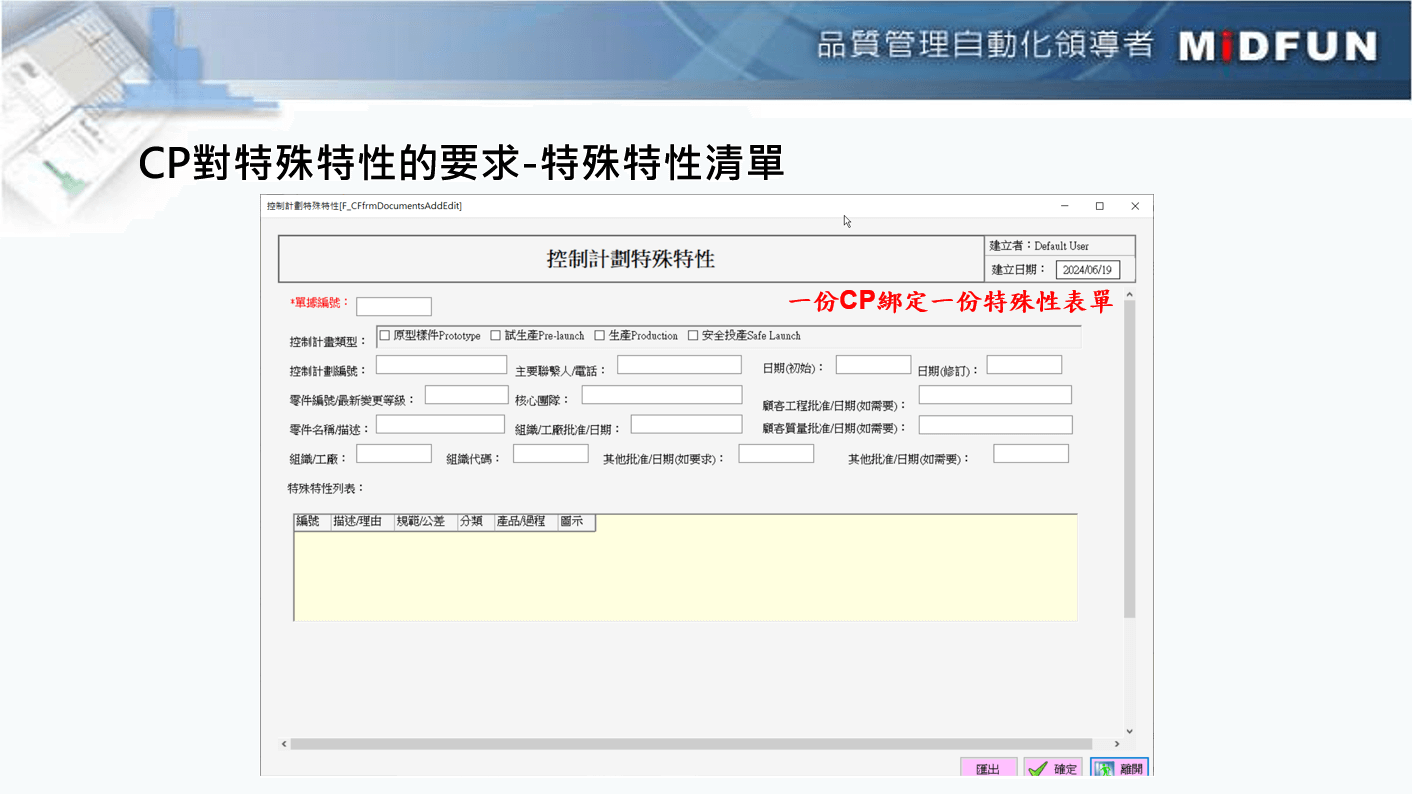
In the appendix of the control plan, there is this special characteristics list.
The special characteristics list is a document that lists the key characteristics in a product or process that have a significant impact on the final performance, safety, or regulatory compliance of the product. Special characteristics are usually divided into two categories:
- Product special characteristics: characteristics related to product design (such as dimensions, material performance, etc.).
- Process special characteristics: characteristics related to the manufacturing process (such as temperature, pressure, time, etc.).
The characteristics list contains the characteristic number, the characteristic name, the specification tolerance, and the special characteristic classification symbol, indicating whether it is a product characteristic or a process characteristic, and it must include relevant illustrations.
In today’s fiercely competitive market environment, ensuring product quality and delivery reliability is the key to a company’s success. MiDFUN’s BKM system integrates quality management tools such as APQP, FMEA, and CP, and continuously complies with the latest manuals and regulatory requirements. It can help companies systematically manage product development projects and reduce risks in the manufacturing process, improve process stability, and ensure that products meet customer needs and regulatory standards. If you would like to learn more about the BKM system features, please click <Contact Us> and we will get in touch with you as soon as possible!

Copyright © 2025 MiDFUN Co., Ltd. Some rights reserved
Author: Pei-Chi Chiu. First published: 2025-02-02. Type: Quality Management Column
This work is released under the Creative Commons Attribution-NonCommercial-NoDerivatives 4.0 International License (CC BY-NC-ND 4.0). You are welcome to share it freely, provided that you credit the original author, include the original link, do not use it commercially, and do not modify the content.
Suggested citation: Pei-Chi Chiu (2025). “AIAG Six All-New Core Tools – Latest BKM System – APQP and CP Feature Overview.” MiDFUN Quality Management Column.
Reprint authorization and content inquiries: midfun@midfun.com.tw